Posted on

Careers in Horology

It is this time of year when many students start thinking about careers. Working in the field of antique clocks as a horologist can be very rewarding.

The horologist was a top profession in the 18th century

In the 17th and 18th centuries it was one of the top professions. Now I suppose the doctors and dentists or bankers and accountants are today.  It is a shame that many colleges do not offer courses in horology but some still do.  West Dean College still provides excellent courses in horology. There is an excellent article in the Independant newspaper on these horology courses and ‘breathing life into old treasures’. It is possible to do home study courses in horology with the British Horological Intstitute. It is also possible to do a BA Hons course at Birmingham City University in horology.


Excellent Career Path

I believe it is an excellent career path for young students. What I have found in the last 20 years or so is many people retiring into studying horology. This is fine but if young people knew how rewarding learning and working with antique clocks was, they would gain a head start in the field. Many people retire to work in horology as it has many benefits. It brings enjoyment in bringing something special back to life. Many workshops can be setup at home and so it is a great way to work for yourself and be your own boss.


It is also a great career path to other forms of engineering or maybe working as a specialist auctioneer of clocks and watches. Working and repairing antique clocks brings you lots of knowledge along the way about the way things were made. Knowing how to date antique clocks for auctioneering. This is all valuable information and a great basis from which you can carve out a valuable and rewarding career in what ever you then may choose to do.

Specialize in clocks

There are fewer specialists in this field today and so a bigger chance to make a name for yourself. In the 17th and 18th century every little village had its own clockmaker and London was the centre of clockmaking with the Clockmaker’s Company. Today there are few world recognized horologists. George Daniels was a watchmaker who was regarded as a special talent, he died recently. He gave alot to his field and certainly made a difference. It is certainly possible with the right enthusiasm and drive for students who enter this field today. Make the same difference and to enjoy what they do. I suppose this is a rare in many jobs today. Most people go to work to earn a living, but to actually enjoy your job, this is what makes your job special.

Daniel R Clements – Pendulum of Mayfair Ltd

Posted on

Researching Antique Clocks


I get asked about 4 or 5 times a day if I know anything or know how you can find more information about a particular clock maker. This is another special aspect of buying an antique clock, you are able to research about the maker.

Antique Clock Makers

Clearly it is important first to check your clock is genuine and the makers name which will be engraved to the dial. Check this has always been there, and has not been altered. Sometimes makers names have been changed for more famous names etc to try and increase the value. I always say be very careful if whoever you are buying your clock from really focuses on the maker and not alot else. A quality clock maker with lots written about him in the books will mean a quality case and a quality movement. Names are sometimes put on the chapter ring or on a cartouche. Certain makers have certain styles or features and an expert can recognize their work.

Clock Books

After you have checked the name on your clock dial, one of the best research books for all 18th century clock makers, is a book called G.H.Baillie – Watchmakers & Clockmakers of the World Volume 1 ISBN 7198 0040 4 . Clearly Volume 2 is on later makers.

This book is a good starting point to your research on the clock maker. Do not worry if you do not find your clockmaker listed. Every little town in the 18th century had clockmakers and not everyone is listed.

Visiting the local historic church

To find more information about the maker, I suggest visiting the town of your clock. Say for instance your clock was Henry Lane of Dundee and nothing was written about this maker. I suggest going on a researching holiday up to Dundee for a week. More often than not there is an 18th century church in that town, this is the place to start you search. The clockmaker on your dial will be either buried there, or have repaired the church clock at sometime. They then will be listed in the church records. If you have the time you will find so much information that can not be found in any book.

If you have a genuine or wish to buy a genuine 18th century antique clock this can be quite a fun research project for one holiday. You can not do this with most pieces of furniture. I just believe it brings an added smile to your face when you find the history behind your clock. These clocks that can be still ticking many centuries later in your living room. It is good to add any information you have found to the back of the clock door for all subsequent owners of the clock.

Posted on

Collecting Antiques

I get asked many times about what I would choose if I was starting a collection of antique grandfather clocks.  We feel privileged in helping many special customers and friends source their own private antique clock collections. The most important part if you are deciding to build your own antique clock collection is to purchase them somewhere you can get a guarantee they are genuine.  I would also take you time in building up this collection, it can not be achieved overnight.

What type of clocks to collect?

I believe the greatest antique grandfather clocks were produced between C1680 and C1820. I am now going to suggest a possible date and styles that you could choose to form this collection. It is true you might prefer a particular style of antique clock and then you could just collect this style. There is nothing wrong in doing this. You may prefer just famous London makers from the 17th and early 18th centuries like Thomas Thompion or Edward East or George Graham. I have no problem in collectors heading down this route.

Broad spectrum of clocks

A route I will suggest here is a broad spectrum of special antique clocks from the entire range of the period suggested above. The collection could be increased still further from what is listed below by different dial shapes or antique clocks from different towns also showing distinctive case features.

Examples of Interest

1)

I think it is important to start your collection with a special early example of a London marquetry brass square dial grandfather clock by a reknowned but not necessary ultra famous maker. This clock will date from around C1690 and be a good ‘8-day’ example, usually with a lentical to the trunk door.

2)

I think next on the list would be a good ‘8-day’ or ‘month’ duration English burr walnut square brass dial grandfather clock, again by a good London clockmaker.

3)

I think it is then important to source a good arch or square brass dial early lacquer clock from C1715. This again will be a London area example.

4)

A burr-walnut arched brass dial caddy top London grandfather clock is also essential to any collection. These tend to date from C1715 to C1750.

5)

A good early arched or square brass dial provincial oak grandfather clock should form part of any collection. These dating from early to mid 18th century. These will be good ‘8-day’ examples with maybe an early ‘penny’ moon feature or automaton to the arch or dial centre.

The clocks do not have to cost the earth.

6)

An early oak or maybe pine 30 hour duration clock with brass square dial would be nice in any collection.

7)

Moving on to my favourite period in antique clocks from C1760 onwards. A good C1770 London mahogany arched brass dial is vital.

8

A superb London mahogany arch white dial  ‘8-day’ grandfather clock.

9)/10)11)

Moon examples of 7 and 8 are also important to any collection, as is an automaton example.

12)

A good Manchester moonphase grandfather clock from around C1770

13)

A typical Liverpool moonphase grandfather clock from around C1770

14)

A typical Bristol tidal times moonphase mahogany grandfather clocks from around C1770

15)

A typical Hull pagoda top mahogany grandfather clock from around C1770/C1790

16)

A good Edinburgh grandfather clock from the end of the 18th century

17)

A good white dial Dundee or thereabouts mhaogany arch dial grandfather clock from C1790

18)

A good London with attached hood columns arched brass dial mahogany grandfather clock.

19)

A good London with attached hood columns square silvered brass dial mahogany grandfather clock.

20)

Various Precision Regulator examples with the differing means of pendulum compensation.


Conclusion

I have tried to form the basis of a wide ranging collection This could be a good tool for you to start building your own antique clock collection.  Clearly there are some great clocks from other provincial towns around the country that I have not mentioned. You can also throw in some special provincial makers like Barber or Ogden or Deacon to the mix. I suppose a wide ranging collection should encompace as many differing cabinet styles from all the areas of the UK. These may also include one from the west coast of Scotland, or Ireland, even though I am not a big fan of the typical 18th century case styles from the these areas.  This is just a personal taste though and one clock from each place as an example would not be out of place in any collection. I suppose this depends on space and finance though. I believe a minimum of 25 grandfather clocks would be required to be purchased to obtain a good overall wide ranging collection. This can then be bulked out if necessary be adding more towns or special collectible makers. Clock collecting can be quite addictive.

– Daniel Clements – Pendulum of Mayfair Ltd 51 Maddox street, London –


Posted on

Antique Marine Chronometers

The name John Harrison clockmaker will ring a bell with lots of people. Those in particular interested in antique clocks. Harrison was a special person. These people only ever come round ever generation or so. He was self educated and he started out on his journey as a humble carpenter. It was his love for clocks that made his so well known.  John Harrison dedicated his life’s work to solving the longitude problem.

Longitude Problem

It was fairly easy to find out ones latitude while at sea. Finding your Longitude was not easy in the 18th century. The problem of finding ones Longitude at sea was of vital importance. Our British Parliament in 1714 offered a prize for doing so. This was comparable to nearly 3 million pounds in today’s money to find a solution. Many sailors had lost their lives by miscalculating their position by not knowing their exact longitude. It was Harrison who eventually collected this prize. His clocks are able to be viewed at Greenwich National Maritime Museum. The advent of the marine chronometer as we know today could not really have been carried out without the input and development of various other influential horologist of their time.

John Campbell Marine Chronometer.

Many Failures along the route

One of the first attempts to invent a marine chronometer was made by the inventor of the pendulum clock, Christian Huygens, in 1675 he invented a chronometer but after tests it was not found to be accurate enough. Pierre Le Roy’s invented in 1748 the detent escapement. This formed an important part of all later chronometers was also vital in the development of the chronometer. He in-coorporated this detent escapement with a temperature compensated balance and the isochronous (equal time intervals) balance spring. Thomas Earnshaw and John Arnold in 1780 also were influencial in this field. They developed and patented simplified and detached spring detent escapements. They improved the escapements by bringing the temperature compensation to the balance They also improved the design and manufacture of the balance springs.

Our British Empire

It is in my view the work started by John Harrison combined with the people listed above and various other individuals like Ferdinand Berthoud in France and Thomas Mudge in Britain that served as the basis for marine chronometers as we know them today. Marine chronometers pictured like the one above by Charles Frodsham can be seen still being used up until the World Wars, many years later. It is not until the electronic era and satellite navigation did these chronometers become retired to their various collectors homes and museums.

There were various difficulties for keeping precise time at sea, these chronometers solved these in various ways. The rolling motion of the boat was not good for these antique clocks and so the clocks movement were housed in a case. This case was attached to a gimbals that kept the movement horizontal under even the worst storm. These can be seen in the picture above and below.

Issues to Overcome

The salt air was also not good for the mechanisms and the chronometers were sealed to be airtight.

Also temperature variations was one of the most important factors to overcome, temperature compensated balances reduced these errors to a minimum.

Spring driven fusee movements also compensated for the changes in the spring tension during the wind of the chronometer.

On a final point the addition of a winding cover to the rear of the brass cover for the movement was also added. On one fateful journey a spider entered the movement of one chronometer and slowed the mechanism. This caused the captain to wrongly position his boat on the charts. The boat hit rocks and many sailors lives were lost. Ever since then a cover was added to prevent this recurring. The picture below shows one way this was achieved. On later models a spring loaded disc was used. This needed to be held back while winding.

Conclusion

The marine chromometer was vitally important in the 18th and 19th centuries and was one of the reasons why this country remained one of the foremost naval powers. Its importance should not be understated.


Posted on

English Lantern Clocks

A typical verge 17th century lantern clock with alarm feature to dial centre. These clocks are hung from a hook on the wall and they have one weight which drives both the striking side and going side of mechanism. As a result these clocks go for 30 hours or less on a full wind.

The development of Lantern Clocks

As this is such a broad subject for discussion, I can only give a few important pointers in the development of English Lantern Clocks.  I will try and answer any questions you may have through my main website. The earliest practical timekeepers in homes in this country were the lantern clocks. They deserve discussion and I will do my best in a short piece to give a useful insight into their manufacture/ design and dates.

What is in the name, Lantern Clock?

The name Lantern Clocks always causes much debate. Some people suggest the word derives from a corruption of the word Latten, which used to describe copper alloys, much like brass in the Middle Ages. It is also suggested the name comes from the fact that the clocks shape looks like a rectangular lantern from the period.  In any event Lantern clocks, which are a type of weight driven clock hanging usually from the wall. They came into homes in this country from about C1600 remaining very popular until the 19 th century. You will see many copies of these types of antique clock sold today, many with spring driven movements.

Made of Brass

Lantern clocks were made almost exclusively of brass, you will only find a few posts within the movement and the clock hands made of iron. Sometimes even the antique clock hand will be cut from brass. These clocks generally have a single hand to tell the time. The movements are of a maximum of 30 hours duration. I have never seen a period ‘8-day’ example. These clocks strike the hours on a single bell and are wound from a rope system. Occasionally you will have an alarm feature to the centre of the dial. This alarm feature has sometimes been removed over the years.

(h3>Mechanisms of Lantern Clocks

The earliest mechanisms of these clocks have a balance wheel form of escapement. The development then continues onto the verge escapement and small bob pendulum. The problem with both these methods is accuracy for timekeeping is not great. It was the development of the long pendulum by Huygens in 1656 that further improved these clocks.  Accuracy of about 15 minutes per day was expected with an early balance wheel escapement lantern clocks. Probably 5/10 minutes per day with the early verge escapements. Then onto and to under a minute or so with the anchor escapements and long pendulum.

The long pendulum – Christian Huygens

The invention of the long pendulum was both good and bad for the humble lantern clock. It is clear some of the earliest provincial grandfather clocks were lantern clocks in wood cases shaped very much like coffins. As development continued antique grandfather clock production slowly wiped out the need for lantern clocks. Few lantern clocks tend to be made during the 18th century.

Original lantern clocks dating back to the 17th century are rare and these are highly sought after and collectible. The Victorians unfortunately changed many of the movements of these 17th century lantern clocks. They put key wind late movements to them. I often see these clocks around the salerooms and it makes me sad. I have collected a number of genuine 17th century lantern clocks and many are pictured in the reknowned book by George White on English Lantern Clocks. If you wish to do a detailed study on these exceptional clocks I recommend reading this book. Alternatively visit our website for more information.


Posted on

Antique Clocks Work in Modern Setting

I have worked in the field of antiques all my life. One specialist sideline I have is in interior design. Interior design is an important part of any home and should be considered before any purchase.

Family Business

I love antiques and it is my belief that an antique grandfather clock should be central to any new interior design project. Antique clocks provide a superb focal point to any room. They add so much character to any room setting. Visit our website for great ideas and choice.

Do antiques work in the modern house or setting?

It is a misnomer that you can not furnish a new home with antiques and that you need an old 18th century house. Antiques fit in any home to compliment the decor. I have designed very modern chrome interior houses and filled them with some special antique items. They work really well together with a few select modern items. Do not think you can not use antiques to furnish a modern designer home. You will be surprised at how well they work in this regard.

Less is More

A few special items can bring a loving lived in feel to your home.

At Pendulum of Mayfair Ltd we can arrange a full interior design service. We provide recommendations and special prices for complete house designs. Please contact me today to ask for more details.

Daniel Clements

Posted on

Buying new or antique clocks ?

The question should I buy new or old is normally a no brainer. Clearly for 95% of items buying new is clearly more attractive. The question in relation to clocks is somewhat different.

There are many many reasons why in this instance buying an antique clock from a recognized clock dealer is the correct decision.

Handmade or Machine Made Clocks

1) Clocks generally made prior to C1800 will be handmade. The quality of the movements is generally far better than there new equivalent.

2) Labour costs are increasing ever year and they are considerably more expensive than they were in the 17th and 18th centuries. Buying antique items with intrinsic labour costs built in is a good thing.

3) The skill base in clocks has dramatically decreased over the years. In the 17/18 th centuries etc London was the centre of clockmaking and every little village had its own clockmaker. Today the clockmaking industry is a shadow of its former self.

4) The cabinets are generally far better looking on an antique clock. Veneers on 18th century clocks are clearly hand cut and the finest slow grown timbers are used. Furniture veneers today are generally chisel cut on machines to less than a millimeter thick. Also the finish of antique cabinets has improved with age. The sun and years of waxing gives them a softer more mellow finish. Modern furniture has generally little or no character and usually has a sticky french polish open grain finish.

5) Investment is another key factor and plays a big part in decision making. Although many people keep their antique clocks and hand them down their family trees to the children. (Antique clocks are a great way of reducing capital gains and inheritance tax bills.) For those people that should a rainy day come and they require funds urgently, genuine antique clocks normally increase in value, assuming you keep them in a good condition. Generally modern clocks lose value and depreciate.

Conclusion

The 5 reasons stated above are just a few advantages to buying antique clocks, there is nothing better than owning your little piece of history and a lovely antique clock. Antique clocks have stood the test of time, and with everyone today focusing on green issues, what could be more green. 100% recycled ! Our London shop Pendulum of Mayfair provides an excellent selection to choose from.

Many people will point out that the disadvantage that they are more expensive, this may be true in some instances but you will more than make this up if you come to sell. The increase in value over time of antique clocks has been documented in many books. Don’t delay buy an antique clock today !

Posted on

English Antique Dial Clocks


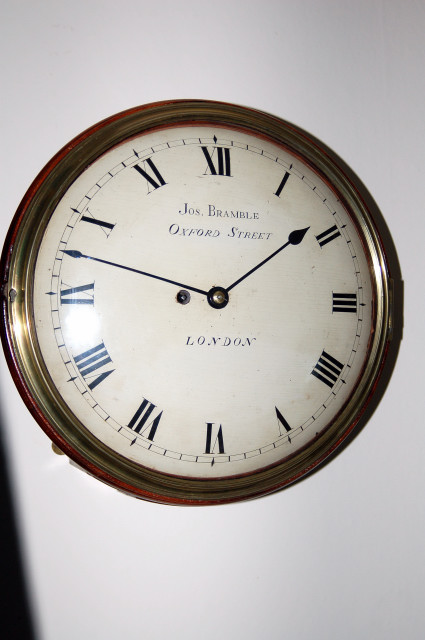
In my last post I talked about tavern clocks. These are really the start and a branch of English dial clocks. In this post I would like to focus on the more standard wooden dial clocks or drop dial clocks. These run from about C 1770 to right up until modern day. I will focus up until WWII. High quality fusee wall clock were made for station clocks and post offices etc  up until the advent of radio controlled quartz clocks.

The Act of Parliament in 1797 imposed a tax on clocks and watches. This forced many clock making factories to close or cut back production or swap production to these wall clocks. Many which could escape the tax. When the tax was repealed many factories that swapped over production to dial clocks. They increased production to take advantage of the more favourable conditions.

Large Established Movement Firms

During the 19th century movement factories making fusee movements for these dial clocks were becoming increasingly successful. The later you go through the 19th century more and more movements for these dial clocks are made by larger established firms. It was found increasingly that the clockmaker bought in movements for his clocks during the 19th century and fewer and fewer clocks were made by the clockmaker on the dial. Production had turned to a form of assembly. In fact from the middle of the  19th century onwards more and more clocks were signed by the retailer of the clock and not the actual maker.

Verge Dial Clocks

The earliest round dial wall clocks are very collectible and they are found with silvered brass dials,  verge movements and ‘salt box cases’. It is rare to find these types of clocks. Most dial clocks will be from C 1820 in date and typically the most I see on my travels date from around C1860/80.  These clocks will usually have mahogany cases and anchor escapements. 99% of these clocks will not be striking and have only one train, just for the timekeeping. The dials can either be flat or convex as will be the glass.

Standard 12 inch Dial Clocks

The most popular size for manufacture was 12 inches across the dial, using a flat white painted dial. More collectible dial clocks tend to have 8 inch or 10 inch dials and the very large 18inch dials are also very hard to find. Most of the best spring driven wall clocks throughout the 19th and even 20th centuries will have fusee movements. These are far better movements than the typical French movements made throughout the 19th century. The French may have excelled in design with interesting mystery clocks etc but the British still excelled in the quality of the movements made through this period.


Wooden Dial Clocks

As I have pointed out the earliest dials were silvered brass dials. Most of the dials produced after C1820 are iron white painted dials, but you will sometimes find a rare example of a wooden dial dial clock like pictured above right.


RAF SECTOR CLOCKS

During the 20th century dial clocks still had an important role to play in the emerging factories. In the post offices and stations many were used in the UK. RAF sector clocks are very rare and were used during WWII and the Battle of Britain. These wall clocks are very collectible and so be very careful when purchasing. Many have repainted dials and are made to look like original sector clocks. RAF sector clocks commonly had 14 inch dials and movements were generally made by the Elliot company and they were dated. The cases usually had a RAF log on the back and a date as well. The finest examples had fusee movements whereas some cheaper examples had going barrel movements. These sector clocks allowed you to see which squadron was in the air at any one time.

Which Squadron was Flying

There were normally three colours painted to the dial in triangles by the side of the numerals. see picture below. Our London store www.pendulumofmayfair.co.uk sometimes has one of these rare antique clocks in stock.


Posted on

Antique Clock Cabinet Restoration


In this blog I wish to talk about the process of sympathetic restoration of a C.1770 antique bracket clock. I will show you the time consuming process that is generally carried out on most 18th century antique clocks at some part in their life.

Sympathetic Restoration Antiques

Sympathetic restoration done professionally is essential. It can literally transform a clock into a wonderful piece of art and bring it back to life. Restoration done poorly or done by an unqualified person can literally destroy the value of a clock.

Difference between Restoration Done Properly and Done Poorly

I also hope you can understand the difference in price of buying an unrestored antique clock from an auction and a carefully sympathetically restored guaranteed example from a respected antique clock dealer. Restoring an antique clock from what we call a ‘sleepy’ state to ‘showroom’ condition takes time. In today’s world labour costs are expensive and as a result can be costly.

How long does it take Restoration Done Properly ?

Restoration taking some 10/15 working days on a cabinet and 5 working days on any antique clock movement are very typical. 20 working days, nearly a month of a highly skilled persons wages, costs alot of money. Some clocks may not need as much work, maybe this will have been carried out at some time in the past, but how well has this been done?

Over Restored Items

On the antiques market there are lots of over restored items. I have seen examples that just make you want to shake your head, sticky french polish and open grain wood.

Antiques Sometimes Ruined

These are not beautiful antiques anymore. Our cabinet restorers have worked with us from school, they have about 20 years experience and have proper in house training. The antique clocks director of a major auction house once stated, ” no one in his opinion restores their antiques as sympathetically.”  The restoration process is a slow labour intensive process, it can not be rushed and corners must not be cut. Clocks or antique furniture do not leave our workshop until the owner himself is happy.

Some Examples of Restoration

Below are a series of pictures detailing the transformation of a bracket clock from a tired somewhat distressed state,  into a beautiful loving cared for example. This clock will now give many years joy to its new owners. Finding clock is such a ‘sleepy’ state is far better I it means they have not be ‘butchered’ by over enthusiastic workmen in the past.


Lots of Intricate Repairs

As you can see in the above pictures where mouldings or pieces are loose these need to be removed and adjusted/repaired and then refitted with animal glues. Animal glues are what 18th century cabinet makers used. They have a superb property that when heated they become unstuck and so repairs to veneers or mouldings can be carried out.  If modern pva wood glues were used to clock sections, repairs would have been more difficult.


As you can see all loose veneers on clock or damaged sections need to be removed and either replaced by wood of the same age and then carved to shape by hand or simply re-glued with animal glue.


Further pictures from a painstaking restoration to a beautiful C.1770 antique bracket clock. A clock might look immaculate as in the top picture prior to restoration but generally many weeks work are required to bring any clock into proper showroom condition.


All repairs can only be done when cabinet is structurally sound. Animal glue over many years can become brittle and mouldings can become loose or have been stuck on incorrectly over years.


Structural repairs to clock are now nearly complete. From now on, the clock will start looking like a clock again!


Repairs carried out, done properly with wood of the correct flame and age, are unnoticeable.


Antique bracket clock restoration perfectly carried out by an experienced cabinet restoration specialist.


The finished clock minus frets to door that need to be fitted. A transformation that is time consuming and can only be carried out be a fully qualified experienced cabinet restorer. For any futher information on antique clock restoration please contact me directly, I will be happy to help. Later in the year I will write on antique clock movement restoration. Please subscribe to my rss feed to received regular information. Pendulum of Mayfair can provide a full antique clock repair service, for more information visit www.pendulumofmayfair.co.uk.


Daniel R Clements


Posted on

Moonphase Antique Clocks

Moonphase Clock With Tidal Times

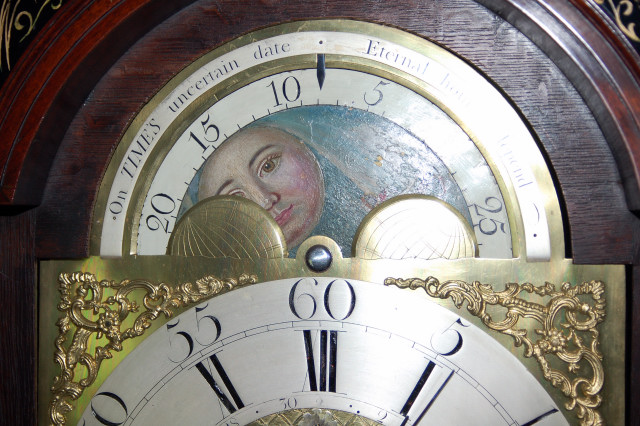
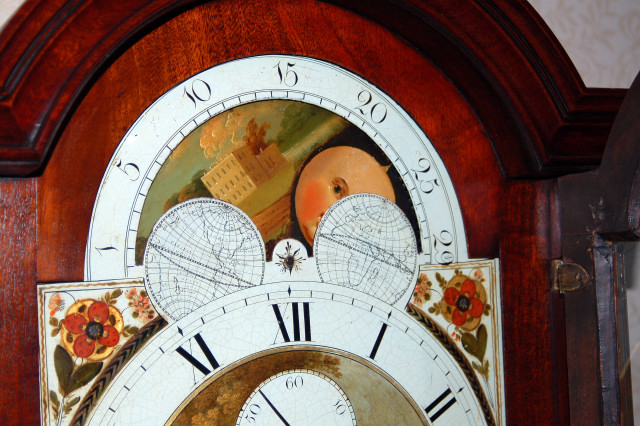
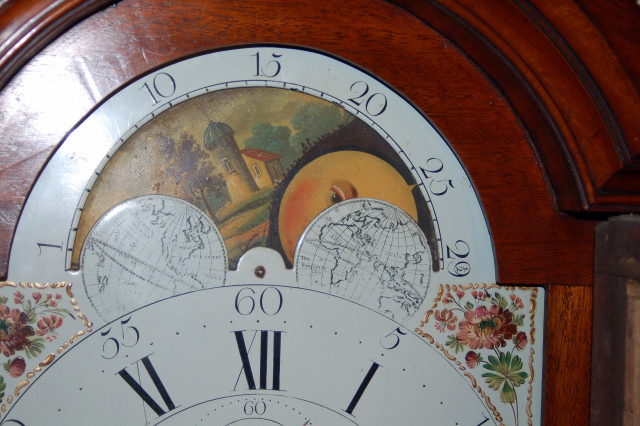
We often get asked about moon phase grandfather clocks. Were they just a form of decoration or were they an important feature on clocks? The lunar moon repeats with a cycle of 29.5 days. This is shown on all antique clocks with a moon feature as a result the moon disc moves once or twice per day.

Moon Disc Use On Clocks

On early pre C.1800 examples they certainly were more of a feature that the owner required for a specific purpose. That purpose was first and foremost travel, whether you would be travelling by ship or travelling by road. Knowing when the next full moon was vital part of life back in the 18th century. A merchant might live near the coast and need to know when the next high tide was. This feature will also be accompanied by a moon disc and he could look at his clock. On that day it would say the high tide would be 7am /7pm etc.

Stationary or Fixed High Tide Indicator on clocks

Tidal times are sometimes stationary. i.e. set to the port of the clock. Bristol Key etc or variable by an indicator to the arch which can be set to your local port, high tide time.

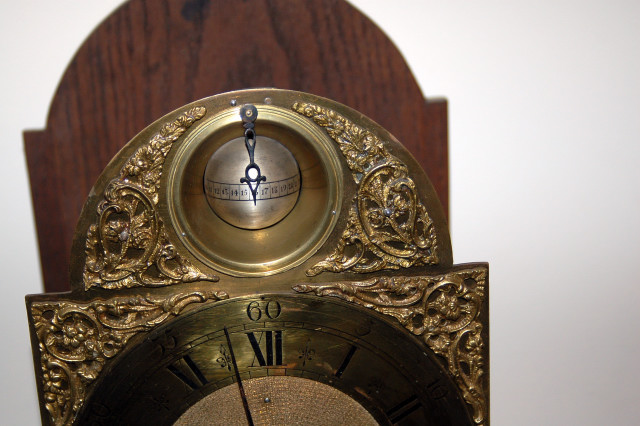
On an 18th century antique clock, a moon disc can either be a  circular disc to the arch or a globe moon to the arch, sometimes called a ‘Halifax Moon’. They also could be, or a small ‘penny moon’ normally to the dial centre. This is where the seconds disc normally would be. Clocks with moon discs and not accompanied with high tide indicators were for help when travelling by road.

Highwayman Higgins

The highwayman was always a risk for the merchant in the 18th century. Tt was always advisable to travel on days with the full moon and lots of light. Generally the highwayman did not work on such nights They were more likely to be recognised. The most famous of northern highwayman was a Edward ‘Highwayman’ Higgins, who was a gentleman by day and a thief by night. He resided on Gaskell Avenue in Knutsford. This is only 5 miles from where our antique clock workshop is based. Higgins was hanged for his crimes in 1767.

London longcase clocks with moon features are very collectible as London had street lighting in the 18th century. Also the arches on London clocks are slightly reduced and not a full semi-circle. They were not really designed for moons.  On provincial clocks you will notice the arch is a full semi-circle and alot more suited to a moon disc. It is for that reason finding a genuine London 18th century clock with a moon is highly sought after. Adding this feature to an 18th century London grandfather clock, can add up to £5,000 to the price on an equivalent clock.

Conclusion

I have been talking above about pre C.1800 clocks and clocks where the dials are 12 inches from side to side or less. Later clocks with dials of 13 inches or even larger are more likely to have moons and are not quite so rare. Clearly lots of later 19th century wider examples can have moons. These are more common and the moon disc on these is more for a form of decoration in my opinion than for any other purpose. We stock a few good examples at Pendulum of Mayfair of moon-phase clocks.

Pictures of different styles of moon dials below

Moonphase feature to square dialstandard moonphase C.1790


penny moon clock