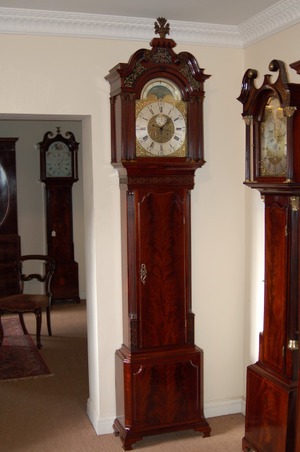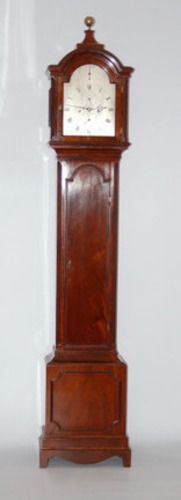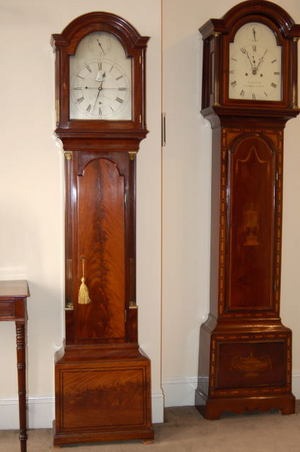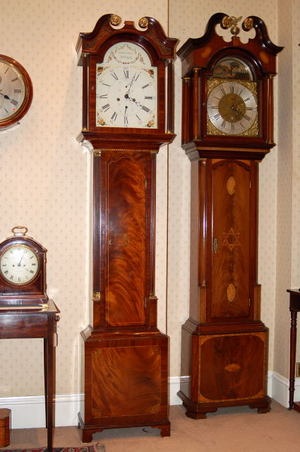
Antique Grandfather Clock by Wright, London C.1790

Wright main

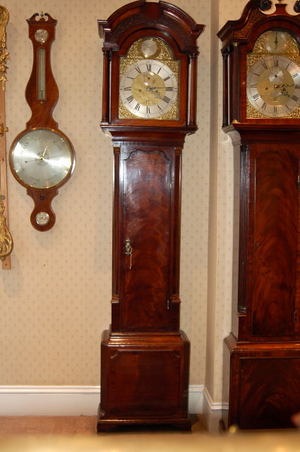
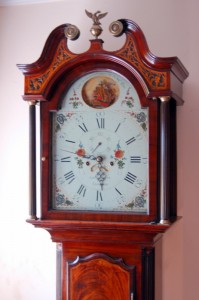
Featured here an outstanding ‘8-day’ London mahogany Longcase clock. Showing quality arch white dial by Wright. The cabinet also with typical high quality London case features and of superb colour and patination. The white dial with seconds and calendar. Including strike silent feature to the arch and makers name to dial centre. Gold leaf spandrels and flowers to corners. Together with gold leaf decoration to the arch. The 5-pillar movement striking the hours on a single bell. A collector’s clock.

Antique Grandfather Clocks

Antique Grandfather Clock by James Cowan – Edinburgh C.1770

James Cowan main

An outstanding quality ‘8-day’ duration flame mahogany Longcase clock. Featured here an arch brass dial by this superb Scottish maker James Cowan. The dial showing chapter ring and spandrels, seconds and calendar aperture. Also with finely matted centre. In addition the makers name being engraved on a cartouche to the arch. Also strike/silent feature to the arch.The high quality movement striking the hours on a single bell. The cabinet with wonderful colour and patination. Swan neck pediments and bracket feet. Long trunk door with choice mahogany veneers.

Antique Grandfather Clocks

Antique Grandfather Clock by Joseph Finney – Liverpool C.1780

Joseph Finney main

Shown here an outstanding mahogany Longcase clock. Featuring here a 13 in arched brass dial example by Joseph Finney. Clearly of the finest quality by this eminent maker. The dial showing sweep seconds and centre calendar. In addition polished and engraved centre, chapter ring and spandrels. Also with moon feature to the arch. The superb quality ‘8 day’ movement with a magnificent and rare ‘pin wheel’ escapement. Beautiful quality flame veneered mahogany cabinet. Superb colour and of the highest quality construction. Joseph Finney is highly regarded. Furthermore he is probably the finest maker to come out of Liverpool in the 18th century. To sum up a superb collector’s clock.

Antique Grandfather Clocks

Antique Grandfather Clock Josiah Emery, Charing Cross – London C1790

Josiah Emery main

A special ’10inch’ dial ‘8-day’ longcase clock with high quality movement. Shown with arched silvered by London maker Josiah Emery. The movement with dead-beat escapement and maintaining power. The dial with seconds and calendar. In addition strike silent feature to the arch. Clearly lovely flame mahogany veneered cabinet. Also with typical London high quality design. Good colour and patination. To sum up a rare collector’s clock.

Antique Grandfather Clocks

Antique Grandfather Clock by John Collins – Wattesfield C. 1780

John Collins main

A good flame mahogany veneered ‘8-day’ Longcase clock. Featuring arch silvered brass dial by John Collins. The cabinet shown with choice mahogany veneers. Also with quarter columns to the trunk. The single train movement with days of the week and sweep seconds feature. In addition calendar feature to the arch. The high quality movement with dead-beat escapement. A collector’s clock. Fine colour and patination.

Antique Grandfather Clocks

Antique Scottish Grandfather Clock by Robert Green – Edinburgh

Robert Green main

Featured here a good quality C.1790 ‘8-day’ duration flame mahogany veneered Longcase clock. Shown with arch white dial by Robert Green. First of all the elegant proportions Scottish cabinet with boxwood stringing and shell inlay to base. In addition the cabinet with swan neck pediments and bracket feet.The hood with reeded hood columns. Another feature is the fretwork below the swan neck pediments. Including brass paterae to the top of swan neck.

The cabinet showing good colour and patination.

Clearly a good quality eight day movement striking the hours on a single bell.

The delicately painted dial with gold leaf decoration and flowers to the corners. Makers name enclosed with flowers to the arch. Subsidiary seconds and calendar features to the dial. Furthermore the clock with matching ‘diamond’ blued iron hands. To sum up a fine Scottish clock.

‘Old Scottish Clockmakers’, by John Smith From 1453 to 1850 has Robert Green listed working from 1781-1834. On the 3rd November 1781, he was bound apprentice to James Howden. 17th January 1789 he was,’Discharged of his indentures.’ On the 4th May 1793 he,’Compeared and presented his essay. This being a watch movement, begun, made, and finished in presence of James Howden Landlord, Geo. Skelton, David Murray, and John Sibbald, essay masters as they declared, etc.’ E.H.Records. He listed a sale of ‘superior watches and clocks at reduced prices’ on 14th May 1832, as he retired from business.

Antique Grandfather Clocks

Antique Grandfather Clock by Rob. Johnson Woolton C.1760

Robert Johnson Woolton main

A good quality ‘8-day’ mahogany Longcase clock. Featuring an arch brass dial by Robert Johnson Woolton. The break arch top cabinet showing superb elegant design. Also with choice mahogany veneers. Including fantastic fretwork to the hood and the cabinet. Also standing on shaped bracket feet. The base with chamfered sides and raised shaped cross-banded panel. The long trunk door also with fine cross-banding. Lovely shaped top to the door. Quarter columns with wood capital to the trunk.

The dial with maker’s name in a boss to the arch, and the dial centre finely matted. Also with subsidiary seconds and calendar, chapter ring and ‘dolphin head spandrels’ to the arch. Fine shaped blued iron hands.

The fine quality brass movement striking the hours on a single bell.

Woolton is a prestigious middle class superb of Liverpool. Many Beatles landmarks can be found in Woolton, including ‘Mendips’ (Lennon’s childhood home at 251 Menlove Avenue) and Strawberry Field. Another one of Woolton’s claims to fame is that John Lennon and Paul McCartney first met at St. Peter’s garden fete on 6 July 1957.

Antique Grandfather Clocks

Posted on

Painted Antique Furniture and Clocks

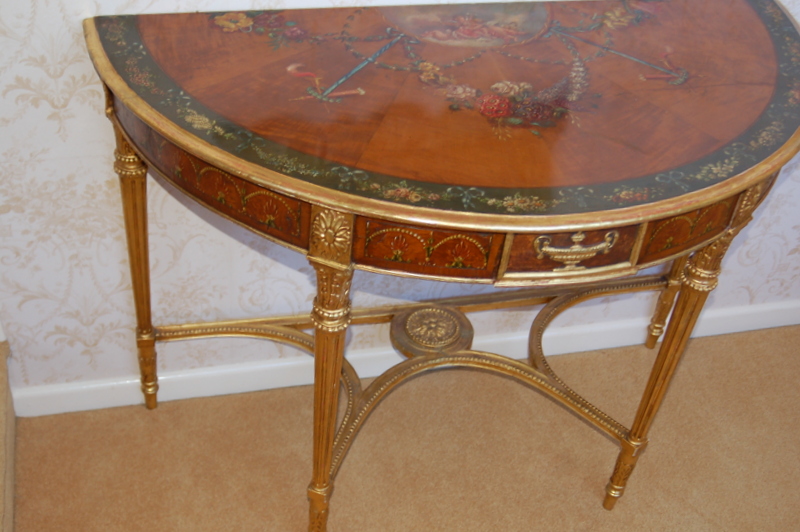
Georgian table decorated in the manner of great artist Pergolesi

Famous Names in Furniture

When I come to think of 18th century antique furniture design, I think primarily of 4 names. There is the great Thomas Chippendale, George Hepplewhite, Thomas Sheraton and last but by no means least Robert Adam. Robert Adam was probably better known for his influence on architecture in the 18th century but he also designed lovely pieces of furniture.

Famous Floral Designs, Pergolesi

It was on one of his trips to the Continent to study foreign designs he came across Michael Angelo Pergolesi. Pergolesi was one of the main characters in the start of painted antique furniture. Designs on antique furniture up to this point had been inlaid into the wood surface.

Fine GIII Satinwood painted decorated side table

Pergolesi trip to UK

Pergolesi stayed in the UK until the end of the 18th century. He worked with the celebrated Adelphi firm. He designed and painted beautiful pieces of furniture and the occasional antique clock. Many of these works decorated with fine figures, flowers and classical urns. He published a book of these designs taken between 1777 and 1801. He worked with other leading figures at he time, many were members of the Royal Academy. These individuals revolutionized the decoration applied to antique furniture.

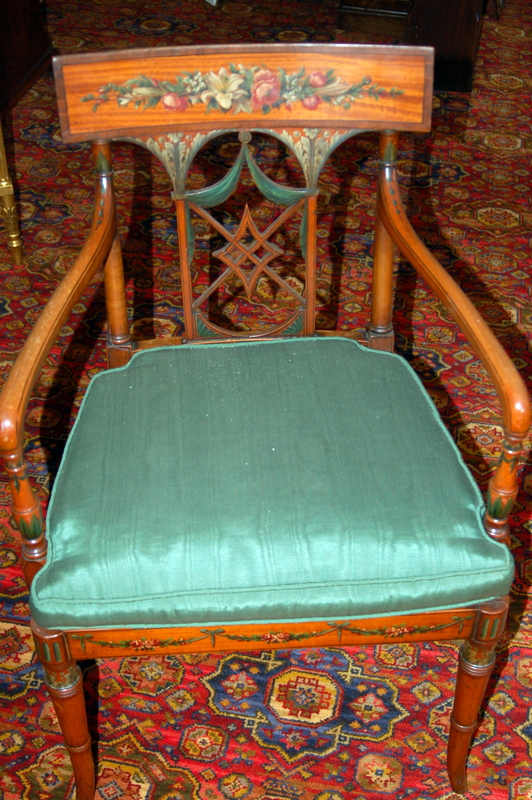
Lovely delicate armchair  with fine designs in manner of celebrated artist Pergolesi

Pergolesi Designs

Pergolesi designs on antique furniture are rare by the fact he worked only a sort period of time in the UK. Those who worked with him in this area left London to work overseas before the end of the 18th century. With this short window of opportunity, very few pieces were made by these celebrated artists and designers, making them highly sought after. Later work like this can be seen in the late 19th century. This is when this type of work hit a revival in the fashion moods at the time.

A link to the clock decorated below can be found by clicking here Gill of Rye Grandfather Clock.

Lovely longcase clock in satinwood with white dial and painted scenes

DSC_0530

Age of Satinwood

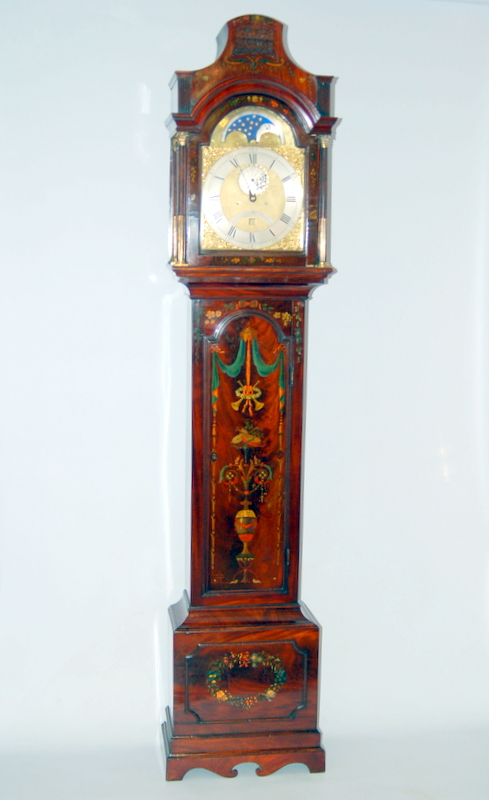
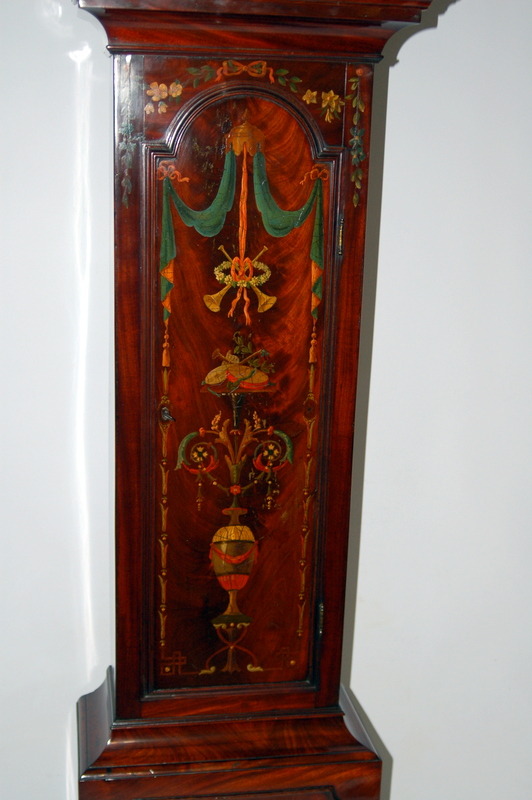
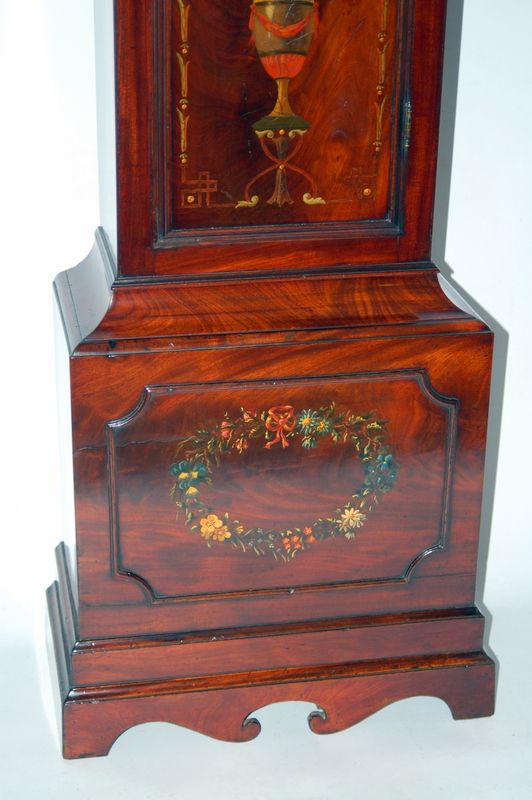
Most of written information on this subject can be found by reading books on the ‘Age of Satinwood’. Many pieces were decorated on this wood surface as satinwood offers a ‘plain canvas’ so to speak for the artists work. It is also true though you will see works decorated on mahogany cabinets in the last quarter of the 18th century. One outstanding such painted decorated clock is seen below.

Ached brass dial moon longcase clock with case of London design but finely decorated with flowers and  urns

DSC_0517

DSC_0518

Posted on

How to Repair a Grandfather Clock ?

Garnet grandfather clock dial after cleaning

Bringing back to life an old dusty and somewhat dilapidated antique grandfather clock into a stunning clock fit for any home is a skill that few people can master. Our workshop here in Cheshire has many years of experience in repairing and restoring antique clocks and furniture. Each having differing respective challenges. I must first say I would only recommend in undertaking such a complex and painstaking restoration if you have the necessary skills and knowledge to achieve this.

Value After Restoration

Poor quality restoration can reduce the value of any fine antique. Sympathetic restoration by highly skilled craftsmen is really important in this respect. Some of our repairs that we have to carry out on clocks is to take away old poor quality repairs. It is usually the case a ‘sleepy’ grandfather clock can actually be easier to repair in may ways than an over restored example.

It is easy to over restore

Once something has been ‘over restored’ it is very hard to correct. The lovely patina in many cases has been stripped off. The beautiful colour underneath the years of grime has been ruined Generally by whatever pot of stain the culprit has used. It is the case restoring sympathetically takes a lot longer, but the end result is far far superior.

We have lots of superb restored North West or Liverpool clocks for sale, you will see a lovely examples if you can visit our search facilty on our website to see various Liverpool clocks here.

North West Clocks

In this blog I will be looking at a lovely North West clock that we have just restored here in Cheshire. To give you some idea of the time taken, the cabinet required just short of 9 full days work. The movement about 2 and a half days.

If only the maker William Garnett of Bold could see the clock now. The clock looking probably even lovelier than it did when it was new back in C1770

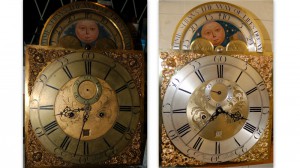
    Before – After Restoration Images
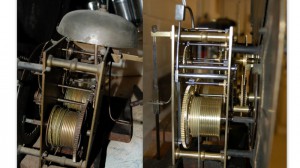
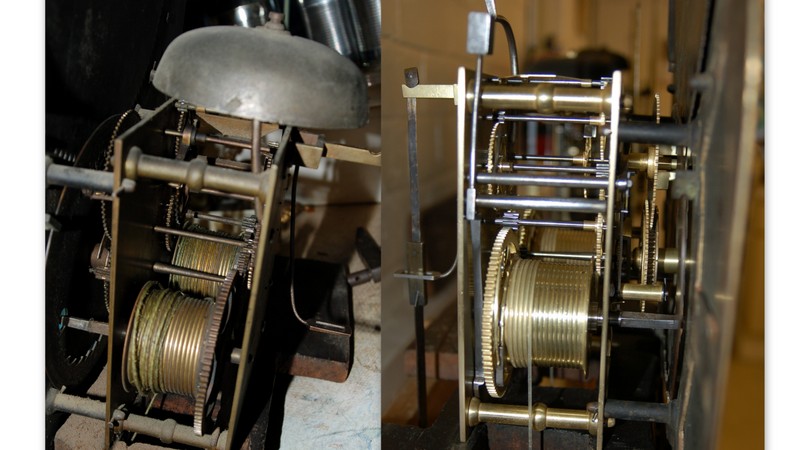
Back to life the Bold movement now cleaned and overhauled

As you can view from the pictures above, the Garnett of Bold antique clock movement has been cleaned and overhauled. It has been brought back to life so to speak. 2 and a half days in the critical A and E department of our Cheshire antique clock workshop and now its heartbeat is working strongly again.

antique cabinet being repaired before restoration

Bold Garnet antique clock cabinet requiring professional restoration

Pictures pre and post Restoration

As you can see from the various pictures taken prior to the restoration taking place, the clock cabinet was in a poor state of affairs. It required some difficult sympathetic restoration to bring this past master back to life. The base panel was warped and twisted and another issue was the wood that was veneered on was all shapes. The hood door mask was smashed and various mouldings and feet to the clock needed attention. The cleat to the trunk door was also loose and the clock had numerous places of small repairs to be completed.

Time consuming work

All time consuming and meticulous work. It is vital for any of these repairs to be undertaken with wood of the same age and colour and grain. A good match can then be obtained. Replacing a foot or moulding with new wood will make it impossible for the repair to match correctly.

Humidity controlled environment

We have a store (all humidity controlled) of 17th ,18th and 19th century woods so a good match can be achieved. Animal glues are used in repairs just like in the past. Animal glues have a great quality that is pretty much unmatched by modern glues. The veneer stuck down with animal glue can be reheated if necessary and unstuck. This meant performing repairs, like was necessary to the base panel of the clock, was possible.

Careful work to base panel of Bold of Garnett clock

Difficult Repairs

In the pictures above very difficult repairs had to be carried out on the base panel. The base panel was warped and their was no way the wood the the veneers to the front had been veneered on could be saved. It had multiple splits and was really rough chopped. We had to remove all the veneer from the base panel. Upmost care has to be taken here. The mentioned veneer is stuck down traditionally with animal glues. An iron and wet rag can therefore be used to steam the veneers off the damaged back panel. A 18th century flat piece of mahogany was used to glue the original veneers back down and straps were used. The twisting of the base panel is reduced in the future.

Period wood Used

All wood used in this process is wood of the correct age of the clock. The veneer is clamped and glued with animal glue as before. The outside of the clock now has a perfectly flat base panel.This will be structurally sound for the years ahead.

Lots of small and more complex repairs on this Garnett of Bold clock

Above you will see lots of tasks carried out by our antique furniture restoration department. The top of the mask was replaced in 18th century wood and various other smaller repairs all over the cabinet. In the next series of pictures you will see the final completed restoration. All work carried out sympathetically and preserving the beautiful colour and patina of this clock. I hope you will agree a repair carried out to the highest standards and making the clock sound for future generations.

Lovely colour and patination Garnett of Bold clock

Conclusions

I could give you many references on the quality of our restoration. Our antique clock and furniture repair and restoration department has carried out many complex tasks. We have undertaken repairs for major Embassy’s in London. Important Hotels and for influential private individuals. I remember a Sotheby’s director who attended our shop opening many years ago of Pendulum of Mayfair in London, said he had never seen as sympathetic restoration before. We pride oursleves on this.

Come see for yourself

You can view items on our website to see our standards or even better still drop by our shop in London. Also visit our antique repair and restoration workshop premises in Cheshire where this work is carried out.
If you want any information or prices on having your clock professionally overhauled and repaired. You can also follow my antique clocks tweets on twitter. Alternatively please read and like my antique clocks page on Facebook.
Daniel.R.Clements

Posted on

Scottish Clocks and Clockmakers

John Scott Edinburgh C1790

I have written many pieces about different types of antique clocks. In my next few blogs, I would like to concentrate on clockmaking from different parts of the British Isles. My first port of call is to the great country of Scotland. As I speak this great country is still part of the United Kingdom. Fingers crossed after over 300 years of being together, it will still be part of the United Kingdom come September 2014.

Clock Makers from North Britain

A great reference book on this topic is Scottish Clockmakers. This is written by John Smith, this charts the development of clockmaking in Scotland from 1453 to 1850. In this book it shows the importance of the Hammermen in Scotland. An organization governing antique clocks and various other trades. In London, clocks were produced by the rules governed by the Clockmakers Company. By 1650 clockmakers started increasing in Scotland.

Hammermen

This was when the clockmakers started being recognized by this branch of the locksmith trade, the various Hammermen Incorporations. The clockmakers were recognized as a branch of the Hammermen in Aberdeen.

Below I have given some but by no means all of the leading lights of Scottish antique clockmaking in the 17th and 18th and 19th centuries. Apologies to those makers I have left out, as the list is very long.

Quality Clock Makers in Scotland

There were a number of very distinguished Scottish makers: such men as Humphrey Milne Edinburgh; Andrew Brown,1665-1712 Edinburgh; Alexander Brownlie 1710-39 Edinburgh;James Cowan, 1744-81 Edinburgh;John Smith Pittenweem unknown-1814; Thomas Gordon; Thomas Reid 1762-1823 Edinburgh; James Howden and son 1764-1842 Edinburgh;Laurence Dalgleish; Alexander Dickie 1762-1808 Edinburgh; Alexander Cumming 1733-1814 Edinburgh /London; finally Dallaway and sons Edinburgh 1785-1812 being but a few of them.

Dial Painters in Scotland

The last entry on this list deserves a mention even though they are not strictly clockmakers. Dallaway produced nearly all the white dial grandfather clock dials in Edinburgh during the end of the 18th century. In England this was carried out in Birmingham by Wilson and Osborne.

John Smith Pittenweem

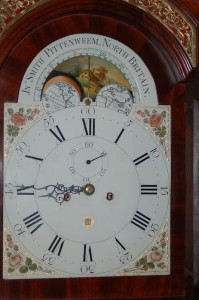
There are some very special names on the list above, John Smith produced some amazing clocks from a tiny fishing village called Pittenweem in the 18th century. You will notice most of the other top makers come from the major towns like Edinburgh. To produce the spectacular clocks that John Smith did in such a tiny place miles from anywhere is astonishing. He deserves special mention. He has clocks in Royal collections and there is a superb example pictured below. The case I believe was purchased from a London case maker on John Smiths only recorded visit to London. A really rare example.

John Smith Pittenweem Antique Clock

Lovely Scottish Cabinet Work

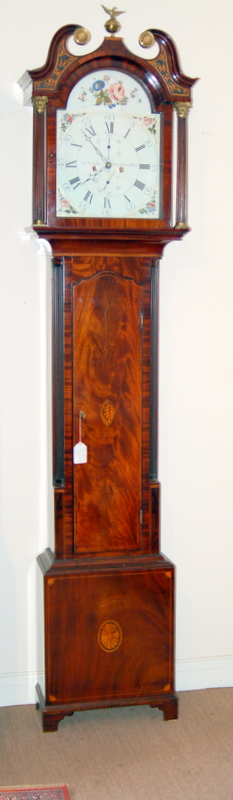
The finest Scottish Grandfathers clocks from the middle to the end of the 18th century had there very own distinctive elegant case style as shown by the clock pictured by the top clockmaker below.

Lauder of PrestonPans

You will notice superb case design on the Pre C1800 antique clocks from the east coast of Scotland. The clock above is from Prestonpans is a small town to the east of Edinburgh, but for all account is classical Edinburgh case design for the period.

East Versus West Coast Scotland Case Making Style

Antique Clocks from Edinburgh and further through Perth and Dundee to Aberdeen case design is really good. I must admit in over 40 years of seeing clocks to the west coast of Scotland though the case design is not the finest in this vicinity. Whereas we have owned and sold hundreds of clocks from Edinburgh, Perth and Dundee, we have only wanted to own one clock from Glasgow in all that time. Most of the time the grandfather clocks from the west coast are not so elegant. The hoods tend to be not greatly proportioned. It is in my opinion clocks from cities like Edinburgh and the east coast of Scotland managed to find some of the best proportions in case design of all clocks, and Glasgow case design some of the worst.

Case style changed in every town

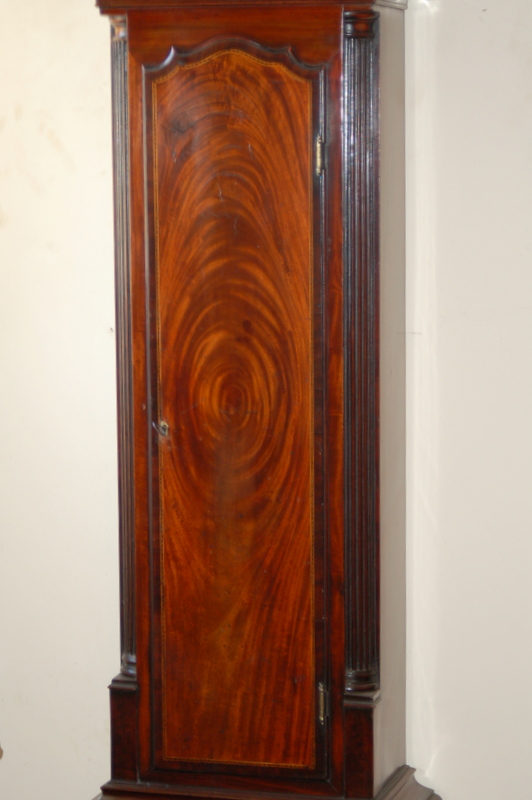
The contrast in design is very large but I suppose everyone’s taste is different! In the picture below you will see the lovely figuring of the mahogany to the trunk door. Many Scottish examples have this twirl to the trunk door from the tree veneers. A lovely feature, quarter columns etc make the elegance of the Scottish cabinets even better. You will not go far wrong in choosing an antique grandfather clock from Scotland, especially if it was made pre C1800 and from the east coast of Scotland.

Lovely Trunk Door from a Edinburgh Clock C1790

Conclusion

We also stock a superb selection of Scottish antique clocks. Most of them pre C1800 but occasionally we have a lovely later Scottish clock like this one from a small town called Old Deer. You can find this clock by clicking here: Old Deer Scottish Antique Grandfather Clock.

Daniel Clements – Pendulum of Mayfair London