Posted on

How to spot fakes – a brief guide

Buying Clocks Advice

So you have finally managed to take the plunge and purchase your antique clock. There are many antique clocks available on the market but not all are original examples. There is nothing worse than spending lots of hard earned money on something that you later find out to be not what you originally thought. Regularly you will only find out something is amiss when someone knowledgeable visits your home. I have had to break bad news when asked for my comments on many occasions.

When buying an antique clock to purchase from someone you can trust. Finding someone like this is never easy. Try and find someone who is long established and are specialists in this field. Maybe they will offer you a money back guarantee. You should then have peace of mind.

Some restoration will have been carried out on all antique clocks. This should be sympathetic restoration though and not major surgery. I have devised some basic things to look out for below.

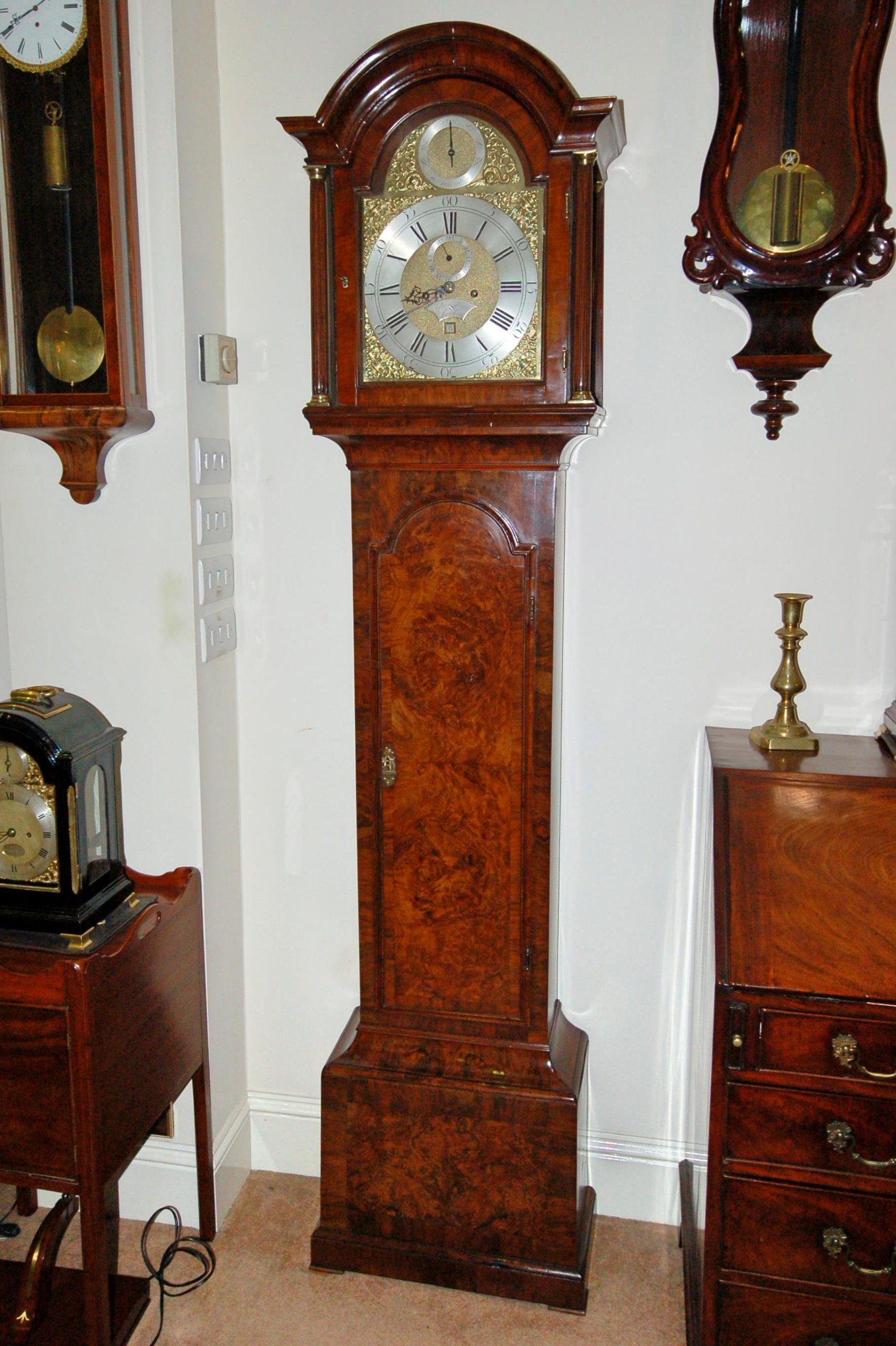
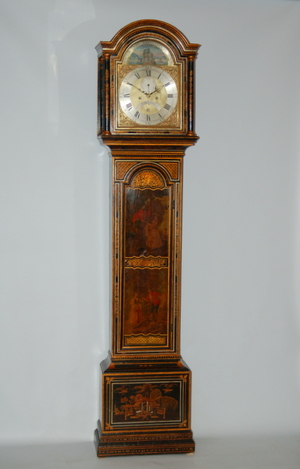
Genuine London Antique Clock C.1770

Look. Smell. Feel.

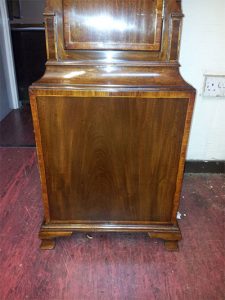
  • Probably the most common part of an antique grandfather clock to have been replaced is the base of the clock. Clocks used to stand on cold, damp floors, and many bases simply rotted away or were attacked by the dreaded woodworm. Clearly the bottom feet or plinth is an acceptable part of restoration but not the entire base section. Easy signs of new bases are when the wood does not match the trunk door. If the figuring of the wood and colour is different be-ware.

    On London and south country clocks the backboard should be old and full length. If the backboard is rotted at the bottom and stops way short of the bottom, this is something to be careful of. If the backboard has rotted away, how much of the base has been rebuilt? In North country clocks, backboards can be made in two pieces from the later part of the 18th century.

  • Style Issues

  • Movements have sometimes been replaced. Make sure the case style corresponds to the makers location. i.e. London mahogany clocks do not have swan neck pediments but dome or pagoda tops. You can look at some good reference clock books for information on what clock cases should look like for different areas of the country. Each area of the UK in the 18th century had a distinctly different style of cabinet feature. For instance London clocks do not use simple oak cases but these are either veneered in walnut, ebony, mahogany or decorated with chinoiserie.
  • Look for Spare Holes

  • Does the dial belongs to the movement? Are there any spare holes in the front plate where another dial has been ? If the clock has a brass dial, this is attached directly to the front plate. Not by means of an iron false plate. (as used on white painted dial clocks) The winding holes on ‘8-day’ clocks are well placed within the centre of the dial These do not spoil the engraving or chapter ring.
  • Dial Features

  • If the clock is an ‘8-day’ example that the clock has a second hand. 99% of all ‘8 day’ clocks should have a second hand to just below the 12 0’clock position. If there is an obvious reason why a second hand cannot be fitted like a ‘penny moon’ feature then this is OK. As a rule though ’30Hr’ clocks do not usually have second hands, and so if the clock has had a later ‘8-day’ movement fitted this is why you should wonder why there is no second hand.
  • Does the age of the movement corresponds to the age of the cabinet? All dials have dating features, for instance inside quarter divisions, type of spandrels. You can date these very easily with good reference books. English walnut cases date from the 17th century up to about 1760. Mahogany cabinets date from about 1750 onwards. Oak cabinets tend to run straight through the 17th and 18th and 19th century’s.
  • Any Packing Under Seatboard?

  • Look for any obvious packing under the seat-board that cannot be accounted for? If the seat-board is old and warped ? A small piece of packing may be necessary.
  • Prior to 1820 all English antique clocks movements should strike on a bell and not a gong. Gong striking is popular around C1900.
  • Look for rub marks from where the weights and pendulum have banged over the years. If you see 1 smooth rub on inside under trunk door and your clock has 2 weights, this is not a good sign. If there are marks on backboard far away from where pendulum is hanging, and the clock is keeping time. Ask what would have caused these marks.

    If the pendulum feather has been changed for a stiffer example, the pendulum height can change slightly This should only be a slight change.

  • Fitting Issues?

  • Investigate whether the dial fits the mask correctly and there are no large gaps. The size of glass should be similar to the size of the dial.
  • Is the face made from 1 piece of brass? This brass prior to C1800 will be cast brass and so thick and thin. The arch section of the dial should be from the same section of brass. If a square dial is later converted to an arch dial case, this is why some dials are made of two pieces.
  • Carved Cases?

  • Finally I have never seen an original fully carved pre C.1820 Longcase clock. The Victorians loved later carving GIII clocks though, and so beware buying one of these examples. Later carving would dramatically effect the clocks value.
  • Conclusion

    I wish you luck in your search. Buying from a recognized antique clock dealer may be slightly more expensive but you will get peace of mind. You should aim to get a money back guarantee that your clock is a genuine antique and a fully working example. It is easy to spend your good money buying a clock with a chequered history. Please take your time and not rush into a decision you will later regret.

    As they say an antique clock is for life and not just for Christmas. In our business we say, hard to find easy to sell. Original examples will provide you will years of pleasure and a good solid investment, Pendulum of Mayfair only sells top quality examples.

    Antique Grandfather Clock by Elias Aylmer Stopes – 1730

    stopes walnut clock

    A superb example of an early 8 day duration 18th century walnut veneered grandfather clock with arches brass dial and strike silent.

    The arch dial with urn and dolphin brass spandrels, finely matted centre, subsidiary seconds and calendar features and strike silent to the arch.

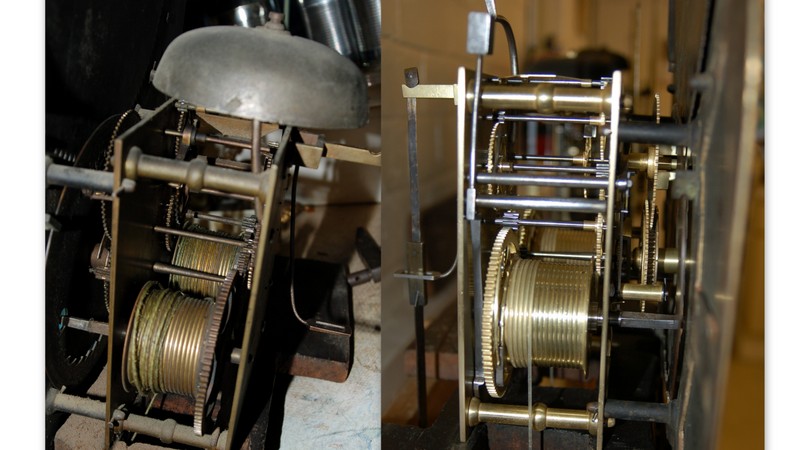
    The superb quality 5 pillar movement striking the hours on a single bell.

    The outstanding quality walnut veneered cabinet with dome top to the hood and reeded hood columns. Long book-matched veneered and moulded trunk door. Also with cross-banding to the base panel. All together standing on a walnut veneered single plinth.

    A clock by this well regarded London clockmaker is listed on page 196 of the reference book English Domestic Clocks by Cescinsky & Webster.A fine choice collector’s clock of superb colour and patination.

    Dear Mr Clements,
    My wife and I would like to express our thanks to you and your family for the warm welcome we received, both at your home, and in London. we very much appreciated the time given to us. I felt it was a pleasure dealing with people who clearly have considerable knowledge on Grandfather Clocks; this certainly provided us with peace of mind that we are buying from a reputable company… I understand that you enjoy golf, therefore when you arrive in Aberdeen, with the clock, we would be delighted to take you on to our local course for a game. so please bring your golf clubs.
    Kind regards,

    Interior Design

    Coppelia Antiques/Pendulum of Mayfair Ltd have been at the forefront of the antique clocks business for over 40 years.During this time we have built up a fantastic collection of customers from all walks of life. We also have become close friends with many other dealers in different sectors of the marketplace.

    History

    Mr Roy Clements is a partner in Coppelia Antiques, and the Managing Director of Pendulum of Mayfair Ltd.He received congratulations from the Secretary of State for Trade and Industry for business achievement and was listed in the pestigious Who’s who of Business Elite for 2002. He was the antique clocks editor of the Millers Antiques Price Guide as early as 1984 and was recently the antique clocks editor of the Judith Miller’s Antiques Price Guide. Our business has been featured in leading newspapers such as The Sunday Times. We have appeared many times on national television in the U.K. Mr Clements is called upon to vet for authenticity clocks at antiques fairs in the U.K., U.S., and Germany.

    An eye for detail

    Valerie Clements, wife of Roy Clements, is in charge of the Interior Design elements within the business. Her parents were involved in Interior Design since the 1950’s.She has a real passion and a keen eye for detail.Valerie has received many stand awards when exhibiting at antiques fairs. She has helped furnish/design many important homes both in the UK and the US. Many of these customers are now close friends as a result of her dedication, passion and love of her work.

    Family Business

    Our family business has grown considerably over the years. It is now one of the most respected, if not the most respected antique clock business in the world. All our customers will receive a warm welcome. A professional service second to none, and on buying receive a complete money back guarantee that all items are genuine antiques. Our family business is special to us, the second generation of this business is going strong. Duncan being the manager at the shop in London and our firm accountant. Daniel a manager in Coppelia and in charge of the buying for the business. We are here for the long term to meet your needs, along the way we will no doubt be meeting many more new friends and customers.

    Conclusion

    We are now able to source the finest selection of antiques even if not presently in stock through our colleagues in other areas in the trade. Our depth of knowledge in the antique field pull on these contacts every now and again. We could buy on your behalf if necessary or for a small commission.

    Buying antiques can be very challenging. Make use of our knowledge and connections and take the legwork out of furnishing your home. Call us today or send me an e.mail with your requirements.

    Daniel Clements

    Antique Grandfather Clock by Spencer & Perkins 1770

    Spencer & Perkins main

    A highly collectable ‘8-day’ flame mahogany veneered grandfather clock. All showing the typical high quality London case features of the time by Spencer & Perkins. This clock has spent its entire life I believe in Portugal in Lisbon. It has also been exhibited in Lisbon. This was to commemorate a famous battle in portugese history where the English helped decide the outcome.

    The dial with two circular painted discs for the dial centre. Together with strike silent to the arch. Spandrels to the dial corners and to the arch as well. Subsidiary seconds and calendar. The movement striking the hours on a single bell. What looks like the original transport piece of wood behind the movement. This would of been used when it was sent to Portugal. A very rare clock.

    Antique Grandfather Clocks

    WIKIPEDIA RESEARCH – EQUATION OF TIME CLOCK – JOHN TOPPING C.1720

    John Topping main

    EQUATION OF TIME – JOHN TOPPING C.1720

    The clock featured here by John Topping is an extremely rare example of the ‘Equation of Time’ calculation. Shown here on an early 18th century Longcase Clock. It is pictured here purely for research within Wikipedia. In addition it is not for sale or any other commercial purposes. People can ask me questions relating to the ‘Equation of Time’ but the clock is not for sale.

    We are all aware of the passage of time. Yet we can not see it. Many inventors have tried to measure time. But it was not until the invention of the pendulum that considerable increased the accuracy of clocks. That the calculation of the ‘Equation of Time’ became very relevant to clocks. Before the advent of the long pendulum in the early days. The clocks were very inaccurate and so calculating the difference between ‘solar’ and ‘our time’ would have been of little consequence.The long pendulum was first invented by Christian Huygens. A Dutch scientists in 1656.The oscillations of the pendulum reduced error to less than 1 minute per day. This eventually came to less than 10 seconds per day.

    Peter Clare Inscription

    Peter Clare, a clockmaker in the 18th century, who worked in Manchester insisted his clocks were right and the Sun was wrong. A memorial to him reads.

    Here’s the cottage of Peter, that cunning old fox. Who kept the sun right by the time of his clocks.

    Many people might think Mr Clare’s observations foolhardy, but it would be folly to dismiss them.

    The clock pictured here by a maker called John Topping of London. It is a superb month duration. Wwalnut Longcase clock with a dial showing the Equation of Time.With these increasingly more accurate clocks. The difference called the ‘Equation of Time’ became more relevant, and Mr Clare was right to some degree his clocks were more accurate than the sun.

    The Equation of Time refers to the difference between the suns time and that shown by the clock. This varies by up to 16 minutes per day during the year. Only on four days in the year is there no difference between the suns time and the time shown by clocks. The days on which the clock and the sun should usually agree are: the 15th of April, 15th of june, 31st of August, and the 24th of December.

    Effectively Peters Clare’s clocks were more accurate than the sun. Clearly this is a result of the elliptical rotation of our planet.

    John Topping Clock

    The clock by Topping shown below is one of the few clocks ever made showing this calculation on a year calendar. It lets the operator know just how many minutes less or more the clocks time is from the suns time. Effectively making it easy to set your clock in the 18th century by means of a sun dial.

    This clock also has the special feature of a spherical moon. Also showing the true shape of the moon. In addition this is accompanied with a tidal times indicator. Also rise and fall of the pendulum. Thus making for changes of seconds to the timekeeping. It is housed in a superb elegant burr walnut cabinet.

    Very few clock makers ever had the talent to make such complex clocks. Only the finest clockmakers have examples to their work. These are very few and far between. Thomas Tompion I believe made 3 equation clocks. Topping as listed here made a few, Williamson, who made several equation clocks for Quarre and the maker Gregg.Clearly very few are still surviving today. The complexity of the movement is mind blowing. To sum up a very rare and interesting clock.

    Antique Grandfather Clocks

    Repairs

    All the Antique Clocks and furniture sold at Pendulum of Mayfair are restored sympathetically to a high standard at our own workshops. It gives us great pleasure and satisfaction working with antiques and understanding the skills and methods used by these 17th and 18th century craftsmen. Very few of the clocks that we make today will be in working order in 20 years time, let alone 200 years. Our legacy of the 20th century is basically a throwaway society.

    When these Longcase clocks were produced in the 17th and 18th centuries, I wonder if their makers understood that these clocks would last virtually for ever. They were made then to a quality and not to a cost, and designed to last; I only wish their makers could see them still ticking in many homes today.

    One would think as a nation our skills would have increased; have they? The skill industries are declining. In the 18th century one of the highest skilled and respected professions was the local clockmaker. We are truly honoured to work on these master timepieces!

    Cabinet Restoration
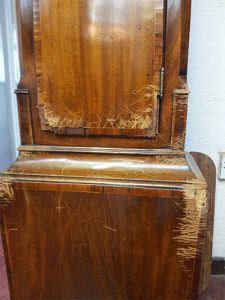
    All the basic skills and methods were developed in house by the company’s owner. Just like the olden days we believe it is best to start young and give our youth of society a highly skilled trade and a better future. We consult local schools careers masters and handpick the most conscientious and caring students around. Training lasts for a period of approx. 5/6 years. We take great pride in the finished output of our workshop, even if the item in question is 500, or 50,000,we take the utmost care in trying to produce the best work possible, irrespective of how long it takes.

    We do not cut corners; goods only leave our workshop when the owner himself is happy with them. If any part is not to the required standard, the item is sent back and finished to his satisfaction. At the opening of our London shop in November 1995, the head of Sothebys clock department was quoted as saying, ” no business restores their antiques as sympathetically.”

    He was able to say this on good authority, because he was shown one clock that he had previously sold unrestored at his auction.

    Our methods that we use in our workshop are special; we try and maintain the original colour and patination to give a soft finish. All repairs are carried out with wood of a similar age to the article being restored. We buy distressed antiques to saw up for veneers; this wood is then graded in to types and age, to provide as near as match as possible.

    Over the last 20 years we have amassed considerable stocks of material for restoration.

    Antique bracket clocks in restoration

    We have extensive stocks of over 200 Antique Longcase Clocks available unrestored awaiting restoration. All stock both restored and unrestored is kept in controlled environments for both temperature and humidity. If antiques are bought that have not been previously stored in the correct conditions as above, they are more likely to warp or split, whenever they are subject to central heating. It is advisable to keep antique furniture in R.H. between 40 and 65%.

    Movement Restoration

    Be very careful with whom you entrust your antique clock movement. Most of our time in the clock department is taken putting right what other so called restorers have done in the past. Because of this we like to work on untouched antiques in so called sleepy condition.

    Again the work we do on this side of the antiques business is of utmost importance to us. We ship antique clocks to all corners of the world. They have to work properly; all movements are pre cleaned, then all the necessary work is carried out. We do the pivots/bushes, all to close tolerances. The bushes are of the Swiss bergeon type or are made by us out of cast brass, to match the colour of the movement. The pallets are restored with high-grade material, and then all the other necessary work is carried out. There is a final cleaning/polishing stage where we use gloves.

    The dials are lacquered using a special colourless lacquer to keep them as clean as possible for years to come. Finished movements are then tested and regulated for timekeeping for 7-21 days. Longcase movements should not need maintenance after we have serviced them for wear for the next 40 years.

    They will require oiling every 1-2 years and may require cleaning if kept in dusty atmospheres. Oiling takes 5-10 minutes and is easily carried out by the owner.

    Conclusion
    High quality restoration of antique grandfather clocks and longcase clocks

    Buying an antique clock( be it longcase / grandfather / tallcase / wall / bracket clock) is a decision you should not take lightly. Whereas you normally buy a car for 3-5 years, a house for 10 years, one of our clocks will still hopefully be in your family in the next Millennium. You will not understand, unless you have owned one of our clocks, the pleasure they bring. Many of our customers have testified that it is like a nice person coming to live with you!

    View our antique clocks available online and if you require any further information or references of our work, please contact me.

    Daniel.R.Clements

    Posted on

    Great Christmas Gift Ideas

    Silver looking around for that ideal stocking filler.
    Silver looking around for that ideal stocking filler.

    Have you ever been completely lost over what to get your loved one at Christmas?

    If so you are one of millions of us rushing around at the last minute with no clue of what to get?
    We usually spend hundreds of pounds on something that will be forgotten within a few days. How about some suggestions that will be a memorable present for many years to come ?

    Everyone has a budget at Christmas. I will be looking a various options from a few hundred pounds to a few thousands pounds for those with bigger pockets. Maybe for ones like me that tend to save up and buy something really special once a year as a special treat.

    Under 500£ Presents

    Lovely Art Nouveau Balloon Clock C1900

    Swan Neck Balloon Clock C1900

    Lovely Art Nouveau Balloon clocks can be a wonderful Christmas gift. Fully restored examples in top condition and of the best quality can be found at under 500£. These lovely little clocks will give years of superb service. Always reminding the person of the day they receive this lovely gift.

    Under £1,500 Presents

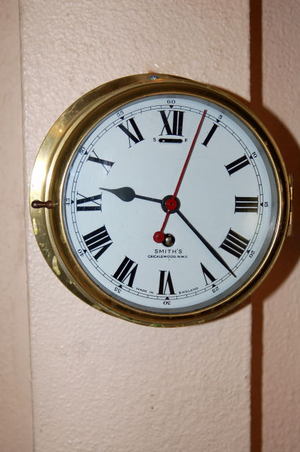
    Ships wall clock

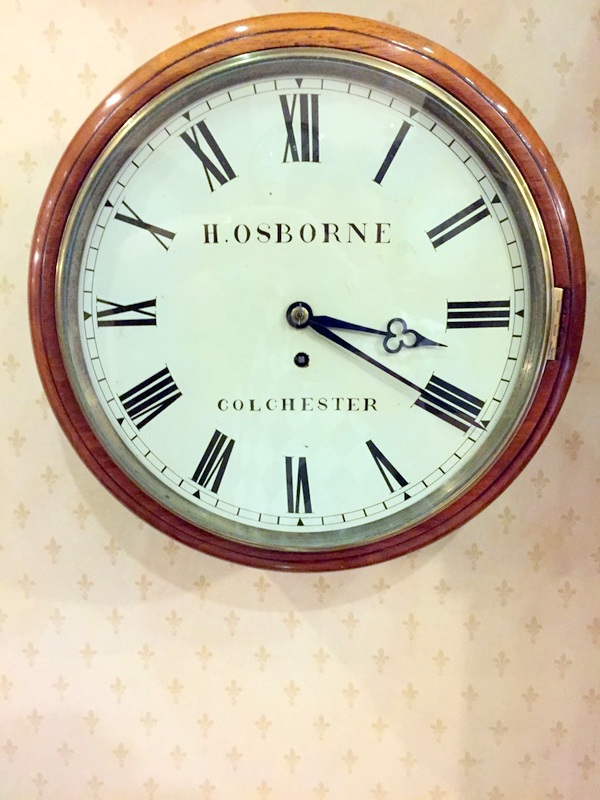
    Osborne of Colchester Dial Clock

    Antique pre c1900 Fusee wall clocks that have been overhauled and are in showroom condition are fantastic gifts. The earlier type can go from around £1,000 to £1,600. If you want to stretch the budget you can go for a smaller dial example. Convex dials or even rarer large face dials with fusee movement which all are more expensive.

    Under £3,000 Presents

    Joyce Bracket clock with round convex dial

    skeleton clock C1860

    For under or around £3,000 you can get a large selection of early or mid 19th century fusee timepiece bracket or skeleton clocks.

    Under £7,500 Presents

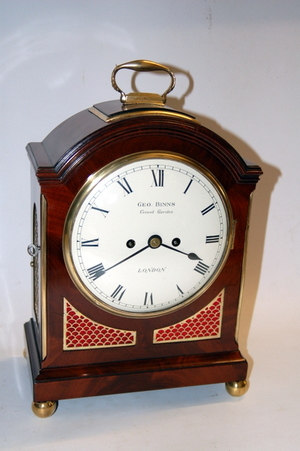
    George Binns Bracket Clock C1820

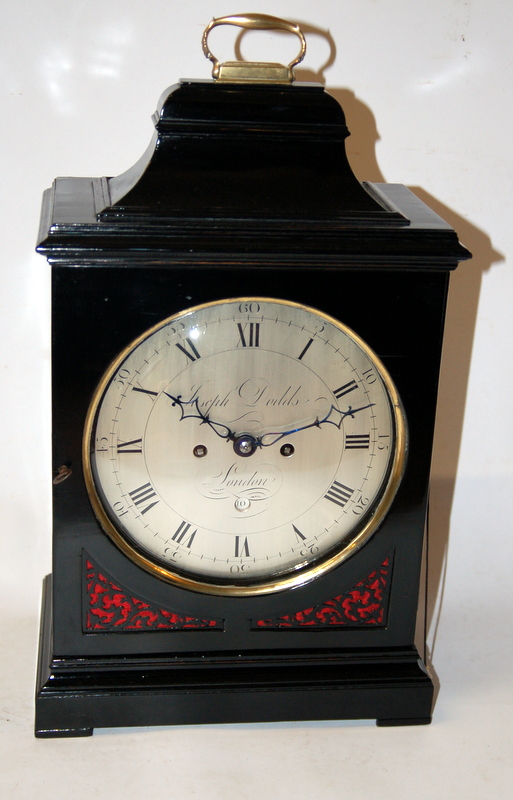
    Dodds ebonized bracket clock

    These superb fusee bracket clocks would be a lovely addition to any home. Woods from mahogany to walnut to ebonized fruitwood can be found on these examples. Most movements are of 8 day fusee type.

    From £3,000-£30,000 Presents

    porthouse grandfather clock

    Old Deer Davidson Grandfather Clock

    Pewsey London Grandfather Clock

    Automaton Lacquer Grandfather Clock

    Antique grandfather clocks form an amazing addition to any home. They truly are the centre piece. Owning a lovely restored ticking antique grandfather clock is like having someone nice coming to stay with you.

    I hope some of these pictures give you the inspiration this Christmas for that really special gift. If not for Christmas then for that special anniversary. Have a part of our nations history ticking away in your home very soon, you won’t regret it.

    Daniel Clements

    Posted on

    How to Repair a Grandfather Clock ?

    Garnet grandfather clock dial after cleaning

    Bringing back to life an old dusty and somewhat dilapidated antique grandfather clock into a stunning clock fit for any home is a skill that few people can master. Our workshop here in Cheshire has many years of experience in repairing and restoring antique clocks and furniture. Each having differing respective challenges. I must first say I would only recommend in undertaking such a complex and painstaking restoration if you have the necessary skills and knowledge to achieve this.

    Value After Restoration

    Poor quality restoration can reduce the value of any fine antique. Sympathetic restoration by highly skilled craftsmen is really important in this respect. Some of our repairs that we have to carry out on clocks is to take away old poor quality repairs. It is usually the case a ‘sleepy’ grandfather clock can actually be easier to repair in may ways than an over restored example.

    It is easy to over restore

    Once something has been ‘over restored’ it is very hard to correct. The lovely patina in many cases has been stripped off. The beautiful colour underneath the years of grime has been ruined Generally by whatever pot of stain the culprit has used. It is the case restoring sympathetically takes a lot longer, but the end result is far far superior.

    We have lots of superb restored North West or Liverpool clocks for sale, you will see a lovely examples if you can visit our search facilty on our website to see various Liverpool clocks here.

    North West Clocks

    In this blog I will be looking at a lovely North West clock that we have just restored here in Cheshire. To give you some idea of the time taken, the cabinet required just short of 9 full days work. The movement about 2 and a half days.

    If only the maker William Garnett of Bold could see the clock now. The clock looking probably even lovelier than it did when it was new back in C1770

      Before – After Restoration Images

    Back to life the Bold movement now cleaned and overhauled

    As you can view from the pictures above, the Garnett of Bold antique clock movement has been cleaned and overhauled. It has been brought back to life so to speak. 2 and a half days in the critical A and E department of our Cheshire antique clock workshop and now its heartbeat is working strongly again.

    antique cabinet being repaired before restoration

    Bold Garnet antique clock cabinet requiring professional restoration

    Pictures pre and post Restoration

    As you can see from the various pictures taken prior to the restoration taking place, the clock cabinet was in a poor state of affairs. It required some difficult sympathetic restoration to bring this past master back to life. The base panel was warped and twisted and another issue was the wood that was veneered on was all shapes. The hood door mask was smashed and various mouldings and feet to the clock needed attention. The cleat to the trunk door was also loose and the clock had numerous places of small repairs to be completed.

    Time consuming work

    All time consuming and meticulous work. It is vital for any of these repairs to be undertaken with wood of the same age and colour and grain. A good match can then be obtained. Replacing a foot or moulding with new wood will make it impossible for the repair to match correctly.

    Humidity controlled environment

    We have a store (all humidity controlled) of 17th ,18th and 19th century woods so a good match can be achieved. Animal glues are used in repairs just like in the past. Animal glues have a great quality that is pretty much unmatched by modern glues. The veneer stuck down with animal glue can be reheated if necessary and unstuck. This meant performing repairs, like was necessary to the base panel of the clock, was possible.

    Careful work to base panel of Bold of Garnett clock

    Difficult Repairs

    In the pictures above very difficult repairs had to be carried out on the base panel. The base panel was warped and their was no way the wood the the veneers to the front had been veneered on could be saved. It had multiple splits and was really rough chopped. We had to remove all the veneer from the base panel. Upmost care has to be taken here. The mentioned veneer is stuck down traditionally with animal glues. An iron and wet rag can therefore be used to steam the veneers off the damaged back panel. A 18th century flat piece of mahogany was used to glue the original veneers back down and straps were used. The twisting of the base panel is reduced in the future.

    Period wood Used

    All wood used in this process is wood of the correct age of the clock. The veneer is clamped and glued with animal glue as before. The outside of the clock now has a perfectly flat base panel.This will be structurally sound for the years ahead.

    Lots of small and more complex repairs on this Garnett of Bold clock

    Above you will see lots of tasks carried out by our antique furniture restoration department. The top of the mask was replaced in 18th century wood and various other smaller repairs all over the cabinet. In the next series of pictures you will see the final completed restoration. All work carried out sympathetically and preserving the beautiful colour and patina of this clock. I hope you will agree a repair carried out to the highest standards and making the clock sound for future generations.

    Lovely colour and patination Garnett of Bold clock

    Conclusions

    I could give you many references on the quality of our restoration. Our antique clock and furniture repair and restoration department has carried out many complex tasks. We have undertaken repairs for major Embassy’s in London. Important Hotels and for influential private individuals. I remember a Sotheby’s director who attended our shop opening many years ago of Pendulum of Mayfair in London, said he had never seen as sympathetic restoration before. We pride oursleves on this.

    Come see for yourself

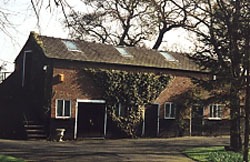
    You can view items on our website to see our standards or even better still drop by our shop in London. Also visit our antique repair and restoration workshop premises in Cheshire where this work is carried out.
    If you want any information or prices on having your clock professionally overhauled and repaired. You can also follow my antique clocks tweets on twitter. Alternatively please read and like my antique clocks page on Facebook.
    Daniel.R.Clements