Posted on

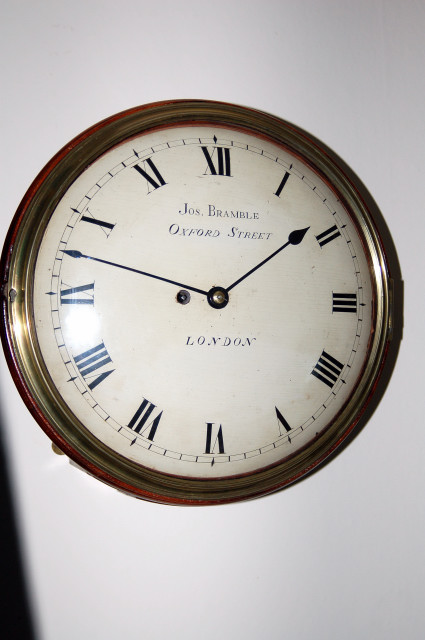
Antique Clock Descriptions

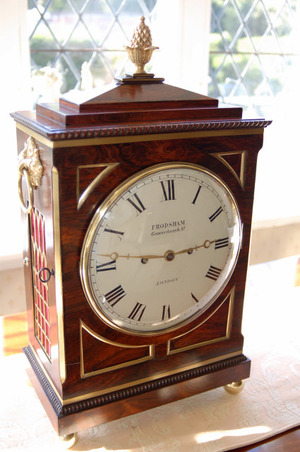
Antique Bracket Clock
Antique Mantel Clock


Alot of people get confused why there are so many names to describe certain antique clocks. I noticed recently on Wikipedia for a search for Longcase clocks you will see they also get regularly called grandfather or tall-case clocks.

Grandfather, Longcase or Tallcase Clocks

Tall-case is a name commonly used for a grandfather clock in the USA. On the Wikipedia site it also mentions the terms grandmother and grand-daughter clocks. It informs us that the difference is as a result of the height. This is true to some extent as clearly grand-daughter clocks are smaller than their larger counterpart, the grandfather. It would be to simplistic to take this as the only reason for the name change though.

Apprentice Piece or Grand-daughter Clock

For instance if you had a small 18th century oak longcase clock under 6ft, you would not call this a grandmother clock. All 17th and 18th century clocks can only really be described as either a longcase , grandfather or as people from USA like to say tall-case clocks.

The date of manufacture and height is important

The date is also important when describing antique clocks. Grandmother and grand-daughter clocks were really smaller examples produced post C1880. We have some very small C1790 floor standing clocks. I would call these miniature longcase clocks or apprentice pieces. The wording can get blurred here to some extent. It would not be unheard of to call these 18th grand-daughter clocks but I think period grand-daughter clocks (18th century) need to be differentiated from the later counterparts. (19th and 20th century).

Bracket or Mantel Clocks

I would like to finish this blog about the differences between what I call bracket clocks and mantel clocks. Again the easy difference is an age thing. 17th / 18th and clocks up to about C1850 will be commonly called antique bracket clocks. Later clocks from about C1850 to modern day examples are called mantel clocks. All bracket clocks will have English quality fusee movements.

English, German or French Movements

The mantel clocks can have going barrel English, German movement or possibly French movements. From the term bracket clocks you will assume no doubt that the difference is the earlier clocks had a seperate wall bracket that they stood on. This is not the case as only some bracket clocks were produced with actual brackets. Most were put on the large Georgian fireplaces. From a simplistic point of view if the clock has a fusee movement it would normally be called a bracket clock. Most mantel clocks do not have fusee movements.

Fusee Movements

17th ,18th and early 19th  century fusee antique bracket clocks are highly sought after. When they were introduced they were a real technological achievement. They actually were more expensive than the equivalent grandfather, only the top 5% of gentry could afford such clocks.

Daniel R Clements


Posted on

Careers in Horology

It is this time of year when many students start thinking about careers. Working in the field of antique clocks as a horologist can be very rewarding.

The horologist was a top profession in the 18th century

In the 17th and 18th centuries it was one of the top professions. Now I suppose the doctors and dentists or bankers and accountants are today.  It is a shame that many colleges do not offer courses in horology but some still do.  West Dean College still provides excellent courses in horology. There is an excellent article in the Independant newspaper on these horology courses and ‘breathing life into old treasures’. It is possible to do home study courses in horology with the British Horological Intstitute. It is also possible to do a BA Hons course at Birmingham City University in horology.


Excellent Career Path

I believe it is an excellent career path for young students. What I have found in the last 20 years or so is many people retiring into studying horology. This is fine but if young people knew how rewarding learning and working with antique clocks was, they would gain a head start in the field. Many people retire to work in horology as it has many benefits. It brings enjoyment in bringing something special back to life. Many workshops can be setup at home and so it is a great way to work for yourself and be your own boss.


It is also a great career path to other forms of engineering or maybe working as a specialist auctioneer of clocks and watches. Working and repairing antique clocks brings you lots of knowledge along the way about the way things were made. Knowing how to date antique clocks for auctioneering. This is all valuable information and a great basis from which you can carve out a valuable and rewarding career in what ever you then may choose to do.

Specialize in clocks

There are fewer specialists in this field today and so a bigger chance to make a name for yourself. In the 17th and 18th century every little village had its own clockmaker and London was the centre of clockmaking with the Clockmaker’s Company. Today there are few world recognized horologists. George Daniels was a watchmaker who was regarded as a special talent, he died recently. He gave alot to his field and certainly made a difference. It is certainly possible with the right enthusiasm and drive for students who enter this field today. Make the same difference and to enjoy what they do. I suppose this is a rare in many jobs today. Most people go to work to earn a living, but to actually enjoy your job, this is what makes your job special.

Daniel R Clements – Pendulum of Mayfair Ltd

Posted on

Researching Antique Clocks


I get asked about 4 or 5 times a day if I know anything or know how you can find more information about a particular clock maker. This is another special aspect of buying an antique clock, you are able to research about the maker.

Antique Clock Makers

Clearly it is important first to check your clock is genuine and the makers name which will be engraved to the dial. Check this has always been there, and has not been altered. Sometimes makers names have been changed for more famous names etc to try and increase the value. I always say be very careful if whoever you are buying your clock from really focuses on the maker and not alot else. A quality clock maker with lots written about him in the books will mean a quality case and a quality movement. Names are sometimes put on the chapter ring or on a cartouche. Certain makers have certain styles or features and an expert can recognize their work.

Clock Books

After you have checked the name on your clock dial, one of the best research books for all 18th century clock makers, is a book called G.H.Baillie – Watchmakers & Clockmakers of the World Volume 1 ISBN 7198 0040 4 . Clearly Volume 2 is on later makers.

This book is a good starting point to your research on the clock maker. Do not worry if you do not find your clockmaker listed. Every little town in the 18th century had clockmakers and not everyone is listed.

Visiting the local historic church

To find more information about the maker, I suggest visiting the town of your clock. Say for instance your clock was Henry Lane of Dundee and nothing was written about this maker. I suggest going on a researching holiday up to Dundee for a week. More often than not there is an 18th century church in that town, this is the place to start you search. The clockmaker on your dial will be either buried there, or have repaired the church clock at sometime. They then will be listed in the church records. If you have the time you will find so much information that can not be found in any book.

If you have a genuine or wish to buy a genuine 18th century antique clock this can be quite a fun research project for one holiday. You can not do this with most pieces of furniture. I just believe it brings an added smile to your face when you find the history behind your clock. These clocks that can be still ticking many centuries later in your living room. It is good to add any information you have found to the back of the clock door for all subsequent owners of the clock.

Posted on

Collecting Antiques

I get asked many times about what I would choose if I was starting a collection of antique grandfather clocks.  We feel privileged in helping many special customers and friends source their own private antique clock collections. The most important part if you are deciding to build your own antique clock collection is to purchase them somewhere you can get a guarantee they are genuine.  I would also take you time in building up this collection, it can not be achieved overnight.

What type of clocks to collect?

I believe the greatest antique grandfather clocks were produced between C1680 and C1820. I am now going to suggest a possible date and styles that you could choose to form this collection. It is true you might prefer a particular style of antique clock and then you could just collect this style. There is nothing wrong in doing this. You may prefer just famous London makers from the 17th and early 18th centuries like Thomas Thompion or Edward East or George Graham. I have no problem in collectors heading down this route.

Broad spectrum of clocks

A route I will suggest here is a broad spectrum of special antique clocks from the entire range of the period suggested above. The collection could be increased still further from what is listed below by different dial shapes or antique clocks from different towns also showing distinctive case features.

Examples of Interest

1)

I think it is important to start your collection with a special early example of a London marquetry brass square dial grandfather clock by a reknowned but not necessary ultra famous maker. This clock will date from around C1690 and be a good ‘8-day’ example, usually with a lentical to the trunk door.

2)

I think next on the list would be a good ‘8-day’ or ‘month’ duration English burr walnut square brass dial grandfather clock, again by a good London clockmaker.

3)

I think it is then important to source a good arch or square brass dial early lacquer clock from C1715. This again will be a London area example.

4)

A burr-walnut arched brass dial caddy top London grandfather clock is also essential to any collection. These tend to date from C1715 to C1750.

5)

A good early arched or square brass dial provincial oak grandfather clock should form part of any collection. These dating from early to mid 18th century. These will be good ‘8-day’ examples with maybe an early ‘penny’ moon feature or automaton to the arch or dial centre.

The clocks do not have to cost the earth.

6)

An early oak or maybe pine 30 hour duration clock with brass square dial would be nice in any collection.

7)

Moving on to my favourite period in antique clocks from C1760 onwards. A good C1770 London mahogany arched brass dial is vital.

8

A superb London mahogany arch white dial  ‘8-day’ grandfather clock.

9)/10)11)

Moon examples of 7 and 8 are also important to any collection, as is an automaton example.

12)

A good Manchester moonphase grandfather clock from around C1770

13)

A typical Liverpool moonphase grandfather clock from around C1770

14)

A typical Bristol tidal times moonphase mahogany grandfather clocks from around C1770

15)

A typical Hull pagoda top mahogany grandfather clock from around C1770/C1790

16)

A good Edinburgh grandfather clock from the end of the 18th century

17)

A good white dial Dundee or thereabouts mhaogany arch dial grandfather clock from C1790

18)

A good London with attached hood columns arched brass dial mahogany grandfather clock.

19)

A good London with attached hood columns square silvered brass dial mahogany grandfather clock.

20)

Various Precision Regulator examples with the differing means of pendulum compensation.


Conclusion

I have tried to form the basis of a wide ranging collection This could be a good tool for you to start building your own antique clock collection.  Clearly there are some great clocks from other provincial towns around the country that I have not mentioned. You can also throw in some special provincial makers like Barber or Ogden or Deacon to the mix. I suppose a wide ranging collection should encompace as many differing cabinet styles from all the areas of the UK. These may also include one from the west coast of Scotland, or Ireland, even though I am not a big fan of the typical 18th century case styles from the these areas.  This is just a personal taste though and one clock from each place as an example would not be out of place in any collection. I suppose this depends on space and finance though. I believe a minimum of 25 grandfather clocks would be required to be purchased to obtain a good overall wide ranging collection. This can then be bulked out if necessary be adding more towns or special collectible makers. Clock collecting can be quite addictive.

– Daniel Clements – Pendulum of Mayfair Ltd 51 Maddox street, London –


Posted on

English Lantern Clocks

A typical verge 17th century lantern clock with alarm feature to dial centre. These clocks are hung from a hook on the wall and they have one weight which drives both the striking side and going side of mechanism. As a result these clocks go for 30 hours or less on a full wind.

The development of Lantern Clocks

As this is such a broad subject for discussion, I can only give a few important pointers in the development of English Lantern Clocks.  I will try and answer any questions you may have through my main website. The earliest practical timekeepers in homes in this country were the lantern clocks. They deserve discussion and I will do my best in a short piece to give a useful insight into their manufacture/ design and dates.

What is in the name, Lantern Clock?

The name Lantern Clocks always causes much debate. Some people suggest the word derives from a corruption of the word Latten, which used to describe copper alloys, much like brass in the Middle Ages. It is also suggested the name comes from the fact that the clocks shape looks like a rectangular lantern from the period.  In any event Lantern clocks, which are a type of weight driven clock hanging usually from the wall. They came into homes in this country from about C1600 remaining very popular until the 19 th century. You will see many copies of these types of antique clock sold today, many with spring driven movements.

Made of Brass

Lantern clocks were made almost exclusively of brass, you will only find a few posts within the movement and the clock hands made of iron. Sometimes even the antique clock hand will be cut from brass. These clocks generally have a single hand to tell the time. The movements are of a maximum of 30 hours duration. I have never seen a period ‘8-day’ example. These clocks strike the hours on a single bell and are wound from a rope system. Occasionally you will have an alarm feature to the centre of the dial. This alarm feature has sometimes been removed over the years.

(h3>Mechanisms of Lantern Clocks

The earliest mechanisms of these clocks have a balance wheel form of escapement. The development then continues onto the verge escapement and small bob pendulum. The problem with both these methods is accuracy for timekeeping is not great. It was the development of the long pendulum by Huygens in 1656 that further improved these clocks.  Accuracy of about 15 minutes per day was expected with an early balance wheel escapement lantern clocks. Probably 5/10 minutes per day with the early verge escapements. Then onto and to under a minute or so with the anchor escapements and long pendulum.

The long pendulum – Christian Huygens

The invention of the long pendulum was both good and bad for the humble lantern clock. It is clear some of the earliest provincial grandfather clocks were lantern clocks in wood cases shaped very much like coffins. As development continued antique grandfather clock production slowly wiped out the need for lantern clocks. Few lantern clocks tend to be made during the 18th century.

Original lantern clocks dating back to the 17th century are rare and these are highly sought after and collectible. The Victorians unfortunately changed many of the movements of these 17th century lantern clocks. They put key wind late movements to them. I often see these clocks around the salerooms and it makes me sad. I have collected a number of genuine 17th century lantern clocks and many are pictured in the reknowned book by George White on English Lantern Clocks. If you wish to do a detailed study on these exceptional clocks I recommend reading this book. Alternatively visit our website for more information.


Posted on

Regional Characteristics of Antique Grandfather Clocks

Antique grandfather clock cabinet production was separate from the clock maker. The clock maker just produced the fine antique clock movements. As you can imagine communities stayed very much together during the early years and people did not travel long distances. As a result you will notice every area of the country in the 18th century had a very different case style. It is very easy to place the manufacture of an antique clock cabinet from just a very few features on the case.

Case Styles on Antique Clocks

Further case styles can be found by clicking here.

London cabinet designs changed only slightly during the 18th century. You will see after C 1720 and up to C 1800 usually two plinths, moulding to trunk door and high quality walnut, mahogany veneers or fine lacquer work cases. Examples of this can be seen below. After about C 1800 London clocks can lose the second plinth and the moulding to the door, but you will still see them being quite similar in design. You will also find these close similarities in cases of clocks within 50 miles or so of London. Many clock makers actually bought London style cases in these areas.

London Case Styles


Scottish case styles

You will find many regional designs of cabinets. After looking for a while you will get a good idea of where the clock maker was based from just looking a certain case features. In Scotland for example, especially the East Coast you get some wonderful cases from C1770 to c1810. They are all very slender, shaped top to the trunk door, high proportion base and standing on bracket feet. The most similar characteristic is the swan neck pediments to the hood.


North Western UK Case Styles

You will also find Manchester, Liverpool and Bristol cabinets to be quite distinctive. In the 18th century these areas were very wealthy, especially because of the trade going on with the West Indies and the USA. Manchester was the birth place for the industrial revolution. Cabinets in Manchester and Liverpool, tend to be quite large with quite imposing features,  Og feet, Corinthian columns, fine veneers. You will see a typical high quality Liverpool case below.


Bristol was another very important port in the 18th century and the clocks made in this part of the country are very distinctive. Wobbly doors are very common and scenes engraved to dial are very popular, pierced swan neck pediments and OG bracket feet show the fine cabinet work. Again it is easy to see the wealth in this part of the country in the 18th century, the cases are very flambouyant. Understanding case design and the styles of the various parts of the UK cabinet design is important when looking to buy an antique grandfather clock. You can use this knowledge with further research to pinpoint all those important questions that you need reassurance with, when purchasing antique grandfather clocks. Our shop Pendulum of Mayfair takes all these worries away from you.


Posted on

Vienna or German Wall Clock ?

The term ‘Vienna Regulator’ wall clock is commonly used to describe a narrow weight driven wall clock. All these clocks seem bundled together in one big group. This is wrong in my opinion. There should be a clear differentiation between a true ‘Vienna Regulator’ clock and the later ‘Vienna Style Regulator’ wall clock or properly described as a ‘German  Regulator’ wall clock.

Austrian or German Wall Regulator Clocks

Vienna regulator wall clocks are very special and an original example can be very expensive. These clocks were manufactured throughout the 19th century, but most were made from about C1800 to C1850. These clocks were  hand made and of very fine quality. These clocks are also very simple and very elegant. As the value of clocks like this are high many of these type of clocks coming onto the market in recent years are copies. Only buy an early Vienna wall clock from a specialist antique clock dealer. They should give you a money back guarantee that it is genuine and fully restored.

Quality decreases as clocks get more modern

German wall regulators can still be nice clocks. I particularly like the first 10 or 20 years they were made from about C 1860. After C 1880 these clocks become very ornate and the quality tends to decrease. These clocks were made in factories specifically set up to produce them. With the typical German efficiency, lots of these clocks were produced. The value is alot lower than the earlier Austrian handmade examples.


How to tell the difference?

I often get asked how do you tell if I have got a German wall regulator or an earlier Austrian example. The easiest way you can tell the difference is that German weight driven wall clocks often have an imitation second hand to the dial. Austrian wall clocks did not normally use this feature, unless the clock could actually beat seconds. A seconds pendulum means the pendulum will need to be about 1 meter long.

Is it a true seconds indicator?

If you timed the period of 1 rotation on a German wall clock of the so called seconds hand, it will take about 40 seconds. It was in effect just a gimmick, put on the dial just for looks. The Austrians were purists and did not do this. An example of a true Austrian Vienna wall clock will a proper seconds hand is pictured above. You will notice the clock is very long. You will also see two examples below.A German wall regulator and an Austrian vienna regulator. See if you can see which one is which from my reasoning above.

Daniel Clements


Posted on

English Antique Dial Clocks


In my last post I talked about tavern clocks. These are really the start and a branch of English dial clocks. In this post I would like to focus on the more standard wooden dial clocks or drop dial clocks. These run from about C 1770 to right up until modern day. I will focus up until WWII. High quality fusee wall clock were made for station clocks and post offices etc  up until the advent of radio controlled quartz clocks.

The Act of Parliament in 1797 imposed a tax on clocks and watches. This forced many clock making factories to close or cut back production or swap production to these wall clocks. Many which could escape the tax. When the tax was repealed many factories that swapped over production to dial clocks. They increased production to take advantage of the more favourable conditions.

Large Established Movement Firms

During the 19th century movement factories making fusee movements for these dial clocks were becoming increasingly successful. The later you go through the 19th century more and more movements for these dial clocks are made by larger established firms. It was found increasingly that the clockmaker bought in movements for his clocks during the 19th century and fewer and fewer clocks were made by the clockmaker on the dial. Production had turned to a form of assembly. In fact from the middle of the  19th century onwards more and more clocks were signed by the retailer of the clock and not the actual maker.

Verge Dial Clocks

The earliest round dial wall clocks are very collectible and they are found with silvered brass dials,  verge movements and ‘salt box cases’. It is rare to find these types of clocks. Most dial clocks will be from C 1820 in date and typically the most I see on my travels date from around C1860/80.  These clocks will usually have mahogany cases and anchor escapements. 99% of these clocks will not be striking and have only one train, just for the timekeeping. The dials can either be flat or convex as will be the glass.

Standard 12 inch Dial Clocks

The most popular size for manufacture was 12 inches across the dial, using a flat white painted dial. More collectible dial clocks tend to have 8 inch or 10 inch dials and the very large 18inch dials are also very hard to find. Most of the best spring driven wall clocks throughout the 19th and even 20th centuries will have fusee movements. These are far better movements than the typical French movements made throughout the 19th century. The French may have excelled in design with interesting mystery clocks etc but the British still excelled in the quality of the movements made through this period.


Wooden Dial Clocks

As I have pointed out the earliest dials were silvered brass dials. Most of the dials produced after C1820 are iron white painted dials, but you will sometimes find a rare example of a wooden dial dial clock like pictured above right.


RAF SECTOR CLOCKS

During the 20th century dial clocks still had an important role to play in the emerging factories. In the post offices and stations many were used in the UK. RAF sector clocks are very rare and were used during WWII and the Battle of Britain. These wall clocks are very collectible and so be very careful when purchasing. Many have repainted dials and are made to look like original sector clocks. RAF sector clocks commonly had 14 inch dials and movements were generally made by the Elliot company and they were dated. The cases usually had a RAF log on the back and a date as well. The finest examples had fusee movements whereas some cheaper examples had going barrel movements. These sector clocks allowed you to see which squadron was in the air at any one time.

Which Squadron was Flying

There were normally three colours painted to the dial in triangles by the side of the numerals. see picture below. Our London store www.pendulumofmayfair.co.uk sometimes has one of these rare antique clocks in stock.


Posted on

Antique Tavern Clocks


Antique tavern clocks have been studied widely and many books have been written. I wish to correct the commonly held view that these clocks started life only as early as C.1720. You may know these antique clocks by another name, they are sometimes called ‘ Act of Parliament’ clocks.

Act of Parliament Clocks

They were later commonly called this as a result of the tax imposed on clocks and watches in July 1797. With the government being short of funds as a result of many years of war, extra ways to increase tax were thought out. The Act imposed a duty of 5 shillings on every clock, 10 shillings of every gold watch and 2s.6d on every silver or other watch. Assessors were sent round to take account of how many clocks you owned above a certain value.

Public Houses Exempt from the Clock Tax

There were certain exemptions to the Act, these included public houses. Alot of these tavern clocks as the name says were housed in public houses. They were exempt from this very unpopular tax. It led to a decline in the clock trade and luckily was repealed after only 9 months of it being in force.

Lacquer and Chinoiserie Decoration

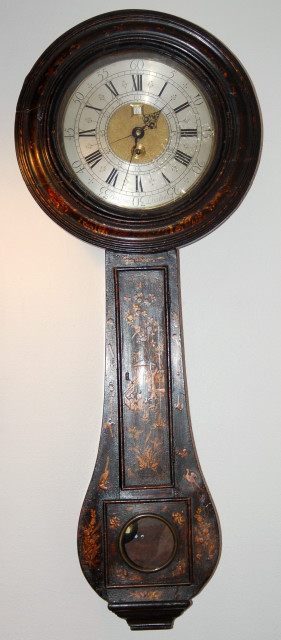
These tavern clocks were usually decorated in lacquer work. They had wooden dials that were made up from usually three sections. They also usually had simple single 5 wheel train movements. The extra wheel in the train generally makes them go for longer than a standard longcase clock, even though they actually have a shorter drop. They usually had brass hands so the time could easily be read against the black painted dial. The earliest dials known were wooden and shaped like a shield. Then later circular dials were introduced and tear drop shapes to the cabinets.

When did they start?

Many books on the subject commonly state the earliest examples of these clocks are from C1720. We have owned for over 10 years, a clock of this form that is pre 1700 in date. It is an amazing tavern clock, it is the only antique clock of this type I have ever seen with an original brass dial, instead of the usual wood form. The antique clock maker is from a family which emigrated to London from Augsburg in Germany. Bushman is a fantastic clock maker and by all accounts the finest clockmaker to come out of Germany! He is mentioned as being on a par with the great Thomas Tompion in some quarters.


Augsburg Influence

If I took a picture of the clock minus the hood it looks like a very early Augsburg table clock. I can see where the idea for the manufacture started. I believe this clock to be one of the first, if not the first,  tavern clock. John Bushman is provable in London between 1661 until just after 1692 ( date of death unknown). We do know he came from the Augsburg area, but you can see the influence from the design of the cabinet work on this clock. Bushman was admitted to the Clockmaker’s Company in 1662. You can see the huge pull of this Guild which I have talked about previously. The best clockmakers from all over Europe came to London. Everyone wanted to come to London and work in the 17th and 18th centuries. It truly was the centre for clock making in the world at the time.

Many people will ask if this clock has 5 wheel train, how does it have a second hand, a sweep centre seconds hand in this case. The movement has a one to one reversing wheel to enable for it to do this. You can see the amazing engraving to the unusual dial and superb unrestored lacquer work to the case. A very rare collectors clock, for more information please contact me direct.


Posted on

Antique Clock Cabinet Restoration


In this blog I wish to talk about the process of sympathetic restoration of a C.1770 antique bracket clock. I will show you the time consuming process that is generally carried out on most 18th century antique clocks at some part in their life.

Sympathetic Restoration Antiques

Sympathetic restoration done professionally is essential. It can literally transform a clock into a wonderful piece of art and bring it back to life. Restoration done poorly or done by an unqualified person can literally destroy the value of a clock.

Difference between Restoration Done Properly and Done Poorly

I also hope you can understand the difference in price of buying an unrestored antique clock from an auction and a carefully sympathetically restored guaranteed example from a respected antique clock dealer. Restoring an antique clock from what we call a ‘sleepy’ state to ‘showroom’ condition takes time. In today’s world labour costs are expensive and as a result can be costly.

How long does it take Restoration Done Properly ?

Restoration taking some 10/15 working days on a cabinet and 5 working days on any antique clock movement are very typical. 20 working days, nearly a month of a highly skilled persons wages, costs alot of money. Some clocks may not need as much work, maybe this will have been carried out at some time in the past, but how well has this been done?

Over Restored Items

On the antiques market there are lots of over restored items. I have seen examples that just make you want to shake your head, sticky french polish and open grain wood.

Antiques Sometimes Ruined

These are not beautiful antiques anymore. Our cabinet restorers have worked with us from school, they have about 20 years experience and have proper in house training. The antique clocks director of a major auction house once stated, ” no one in his opinion restores their antiques as sympathetically.”  The restoration process is a slow labour intensive process, it can not be rushed and corners must not be cut. Clocks or antique furniture do not leave our workshop until the owner himself is happy.

Some Examples of Restoration

Below are a series of pictures detailing the transformation of a bracket clock from a tired somewhat distressed state,  into a beautiful loving cared for example. This clock will now give many years joy to its new owners. Finding clock is such a ‘sleepy’ state is far better I it means they have not be ‘butchered’ by over enthusiastic workmen in the past.


Lots of Intricate Repairs

As you can see in the above pictures where mouldings or pieces are loose these need to be removed and adjusted/repaired and then refitted with animal glues. Animal glues are what 18th century cabinet makers used. They have a superb property that when heated they become unstuck and so repairs to veneers or mouldings can be carried out.  If modern pva wood glues were used to clock sections, repairs would have been more difficult.


As you can see all loose veneers on clock or damaged sections need to be removed and either replaced by wood of the same age and then carved to shape by hand or simply re-glued with animal glue.


Further pictures from a painstaking restoration to a beautiful C.1770 antique bracket clock. A clock might look immaculate as in the top picture prior to restoration but generally many weeks work are required to bring any clock into proper showroom condition.


All repairs can only be done when cabinet is structurally sound. Animal glue over many years can become brittle and mouldings can become loose or have been stuck on incorrectly over years.


Structural repairs to clock are now nearly complete. From now on, the clock will start looking like a clock again!


Repairs carried out, done properly with wood of the correct flame and age, are unnoticeable.


Antique bracket clock restoration perfectly carried out by an experienced cabinet restoration specialist.


The finished clock minus frets to door that need to be fitted. A transformation that is time consuming and can only be carried out be a fully qualified experienced cabinet restorer. For any futher information on antique clock restoration please contact me directly, I will be happy to help. Later in the year I will write on antique clock movement restoration. Please subscribe to my rss feed to received regular information. Pendulum of Mayfair can provide a full antique clock repair service, for more information visit www.pendulumofmayfair.co.uk.


Daniel R Clements