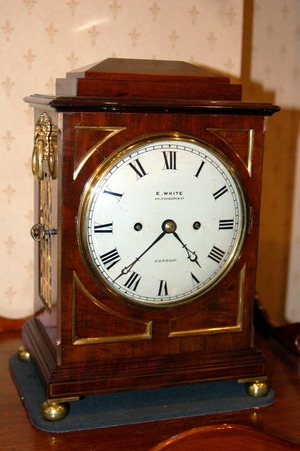
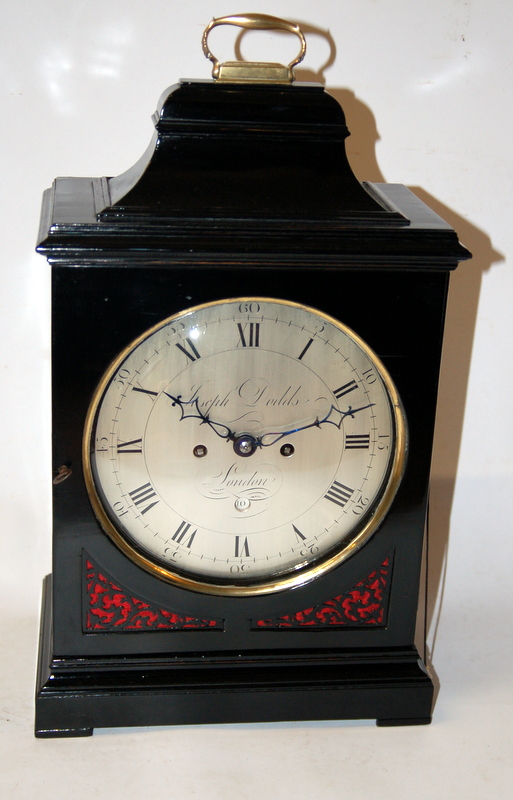
Bracket clock with fusee movement, bell strike and mahogany case. Moulded top case of small size. Edward White of London signed to the dial centre. Convex dial with Roman Numerals. Brass handles to sides of this clock and brass ball feet.Edward White worked closely with Dent. Known for his fine bracket clocks and chronometers.
Silver looking around for that ideal stocking filler.
Have you ever been completely lost over what to get your loved one at Christmas?
If so you are one of millions of us rushing around at the last minute with no clue of what to get?
We usually spend hundreds of pounds on something that will be forgotten within a few days. How about some suggestions that will be a memorable present for many years to come ?
Everyone has a budget at Christmas. I will be looking a various options from a few hundred pounds to a few thousands pounds for those with bigger pockets. Maybe for ones like me that tend to save up and buy something really special once a year as a special treat.
Under 500£ Presents
Lovely Art Nouveau Balloon clocks can be a wonderful Christmas gift. Fully restored examples in top condition and of the best quality can be found at under 500£. These lovely little clocks will give years of superb service. Always reminding the person of the day they receive this lovely gift.
Under £1,500 Presents
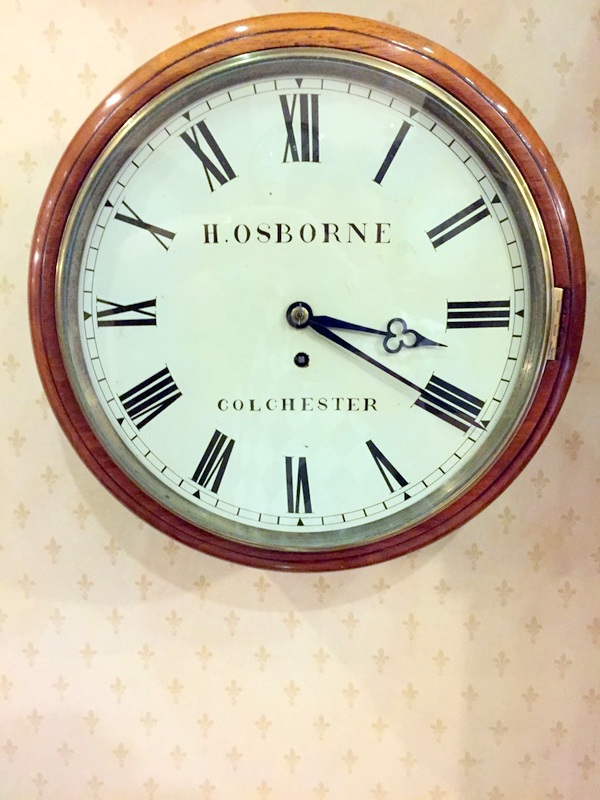
Antique pre c1900 Fusee wall clocks that have been overhauled and are in showroom condition are fantastic gifts. The earlier type can go from around £1,000 to £1,600. If you want to stretch the budget you can go for a smaller dial example. Convex dials or even rarer large face dials with fusee movement which all are more expensive.
Under £3,000 Presents
For under or around £3,000 you can get a large selection of early or mid 19th century fusee timepiece bracket or skeleton clocks.
Under £7,500 Presents
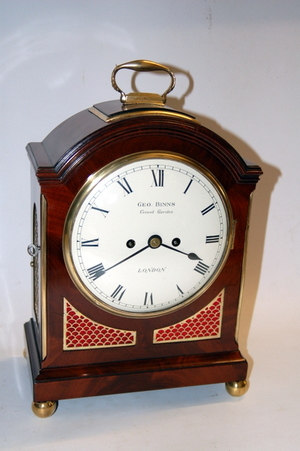
These superb fusee bracket clocks would be a lovely addition to any home. Woods from mahogany to walnut to ebonized fruitwood can be found on these examples. Most movements are of 8 day fusee type.
From £3,000-£30,000 Presents
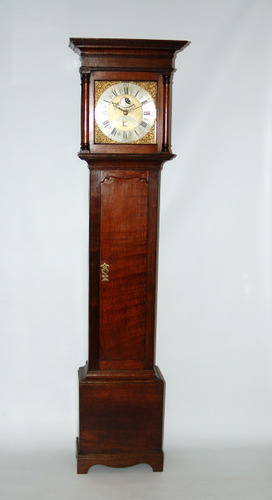
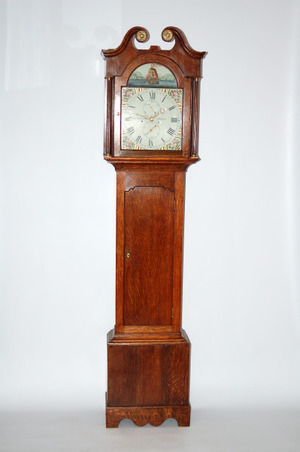
Antique grandfather clocks form an amazing addition to any home. They truly are the centre piece. Owning a lovely restored ticking antique grandfather clock is like having someone nice coming to stay with you.
I hope some of these pictures give you the inspiration this Christmas for that really special gift. If not for Christmas then for that special anniversary. Have a part of our nations history ticking away in your home very soon, you won’t regret it.
For antique furniture and clocks different types of wood were used in their manufacture. In this handy guide I am going to cover some of the main woods used. These woods can be of solid form but most flamboyant grained woods are used as hand cut veneers. The carcass is generally made from oak or pine in the provinces or oak generally in London.
Woods Used in London and Provinces
In London oak is only used as a carcas material in the 17th and 18th centuries. Whereas in the provinces you will find antique grandfather clocks being made of oak as the finished wood. Clearly oak was veneered on as well, especially in London by English Walnut up to say C1750 . Then from this date fine Honduras and Cuban mahogany veneers are found. On some clocks you will find very early examples to be of ebony construction or ebonized (black stained fruitwood generally)
Chinoiserie Clocks
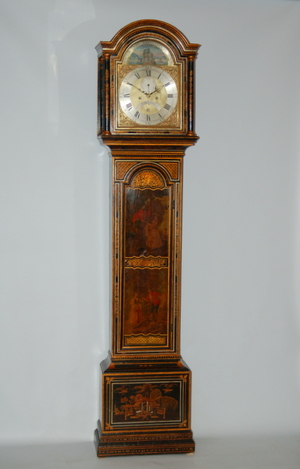
You can also get oak grandfather clocks in London that were painted and decorated by Chinoiserie or lacquer work. The finest examples were sent out on boats and decorated in China. On some later clocks you will see these veneered in more exotic woods. Rosewood or maple or even ewe wood. I suppose the smaller size means you can use veneers of the more slow growing and smaller trees. With early clocks these exotic woods were used as well in small pieces and matched. We have owned a lovely walnut burr oyster veneered grandfather clock.
Below is a selection of woods used for antique clocks and furniture during the 17th and 18th and 19th centuries in England. A brief insight into each wood pictured is given. I hope from this blog you will discover what type of wood your clock or piece of furniture is manufactured from.
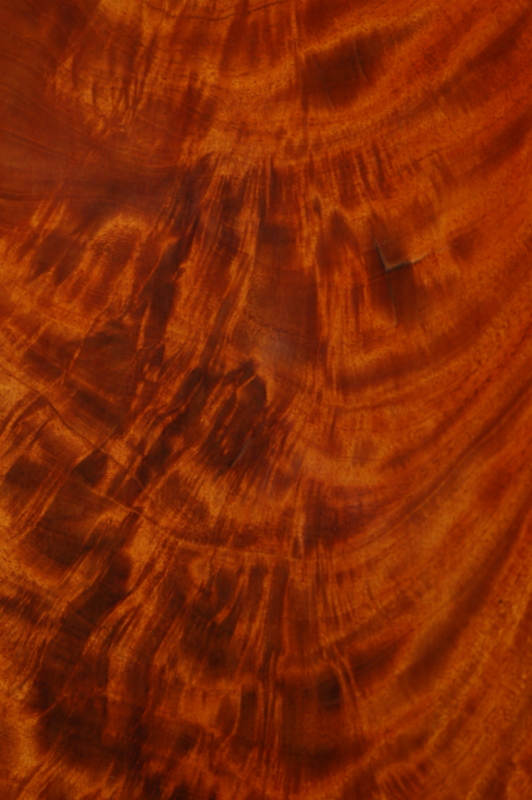
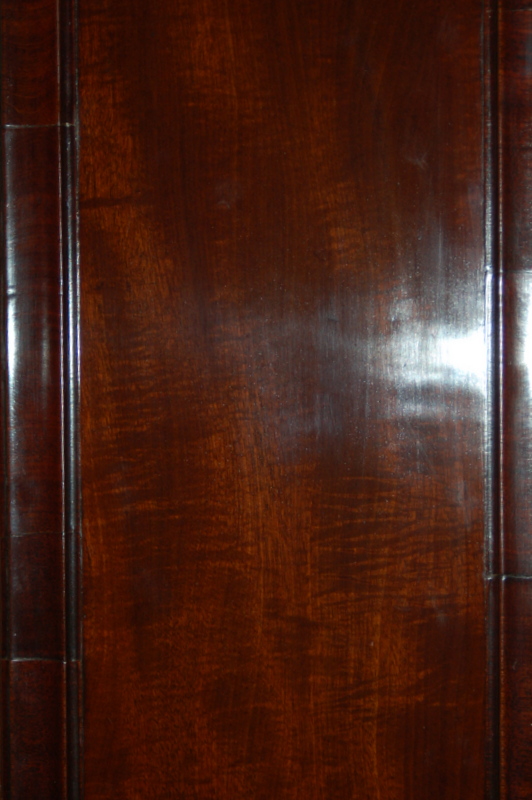
Honduras Mahogany
Cuban mahoganyPlum Pudding (spotted) mahogany
Mahogany can be a beautiful wood, it starts in the UK being used around C1750 and continues being used throughout the 18th and 19th centuries. Two most common variants are Honduras (lighter) and Cuban mahogany (darker). It is a close grain hardwood coming commonly from the South America or the West Indies type regions. This tree can be found quite wide and so large sections could be veneered with this wood.
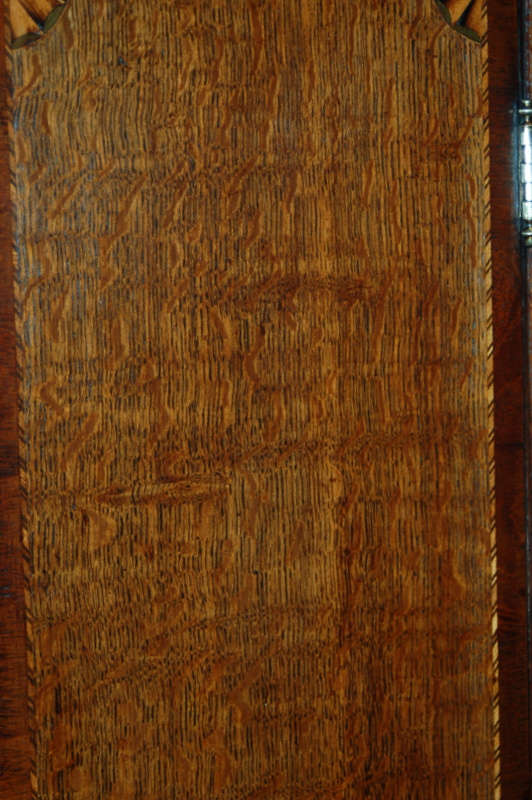
Quarter Cut or star-fleck figured oakSolid English Oak
English Oak
English oak is a slow growing and so very heavy wood. Used in construction and veneered some of the time, but it is a beautiful wood in its own right. Oak being so heavy and close grained it is good at preventing things like wood worm. It is one of the reasons why London used it in the construction of its clock cases ahead of pine. Pine is used in the provinces as a rule for carcases as it is cheaper. You will notice the weight difference between an antique clock veneered on oak and an antique clock veneered on pine. Oak just gets better with age and polishing, we call this the patina. Less close grain oak can come from countries like Japan. This wood although called oak, is a far poorer wood to the slower growing English oak.
The climate effects the grain of the wood
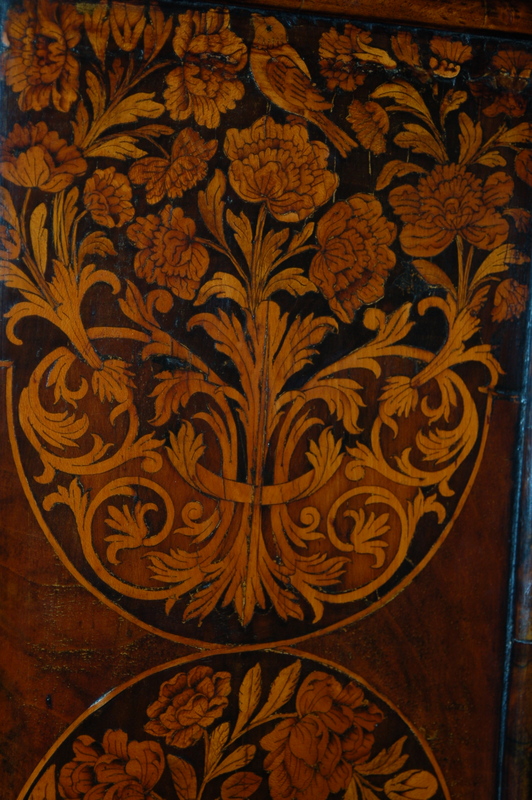
English Burr WalnutMarquetry inlay on English WalnutMarquetry on WalnutContinental walnut
Walnut is a lovely wood and English walnut gets used as veneers in antique furniture and clock manufacture up until C1750. After this date most walnut used is Continental walnut. Continental walnut is a quicker growing tree and so the grain is never as fine as English burr walnut. Again English walnut is a very heavy wood with a close grain. The tighter the burr or knot in the walnut the better. Walnut can range in colour from quite light if the sun has taken it, to quite dark. Walnut is used on all of the German wall regulators or commonly called ‘Vienna style’ wall clocks etc through the 19th century.
Satinwood
Satinwood used as a blank canvass to artists
Satinwood being a very light wood was used towards the end of the 18th centuries and early 19th centuries in the main. Many expensive pieces are manufactured with Satinwood veneers. We have some Pergolesi painted tables with satinwood veneers. I suppose the light colour makes the painting stand out better.
Pine
Pine, many of you will be familiar with this wood. It is rare to see a surviving antique grandfather clock made in this wood like the above. It was prone to woodworm unfortunately. Some were painted and this helped preserve them.Many provincial cabinets were constructed out of pine and then veneered. Pine is also used alot today as it is a relatively cheap wood, unlike oak. Clearly as you can see from the grain and if you lifted it from the weight , it is a fairly quick growing tree.
Lacquer or Chinoiserie
Oak can be veneered or painted
Oak was only used on internal construction of cabinets of English London clocks. When this wood was used and if it is not veneered in London you will find it sometimes decorated with lacquer work or Chinoiserie. This is gold leaf and gesso. The best types of these works are seen when they were sent out to China in the early/mid 18th century and decorated their.
I think I have covered the majority of main woods used in English cabinet making. There are others like ewe wood, maple , elm, fruitwood and rosewood. These are not covered as they are used alot less. I hope this blog has been of help to you. If you are still struggling with finding out what wood your clock or piece of furniture is made from, please send me a picture to PendulumClocks@aol.com