Posted on

Moonphase Antique Clocks

Moonphase Clock With Tidal Times

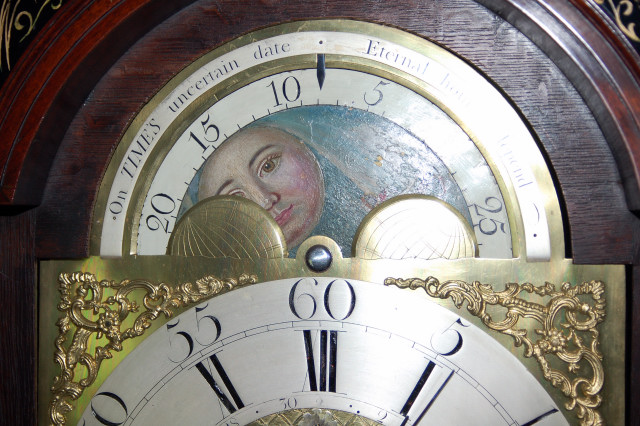
We often get asked about moon phase grandfather clocks. Were they just a form of decoration or were they an important feature on clocks? The lunar moon repeats with a cycle of 29.5 days. This is shown on all antique clocks with a moon feature as a result the moon disc moves once or twice per day.

Moon Disc Use On Clocks

On early pre C.1800 examples they certainly were more of a feature that the owner required for a specific purpose. That purpose was first and foremost travel, whether you would be travelling by ship or travelling by road. Knowing when the next full moon was vital part of life back in the 18th century. A merchant might live near the coast and need to know when the next high tide was. This feature will also be accompanied by a moon disc and he could look at his clock. On that day it would say the high tide would be 7am /7pm etc.

Stationary or Fixed High Tide Indicator on clocks

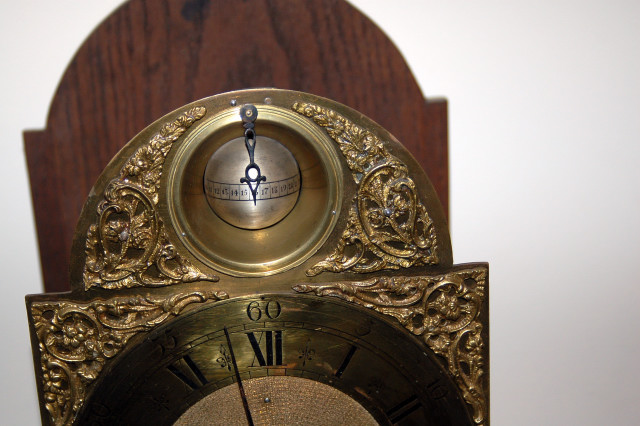
Tidal times are sometimes stationary. i.e. set to the port of the clock. Bristol Key etc or variable by an indicator to the arch which can be set to your local port, high tide time.

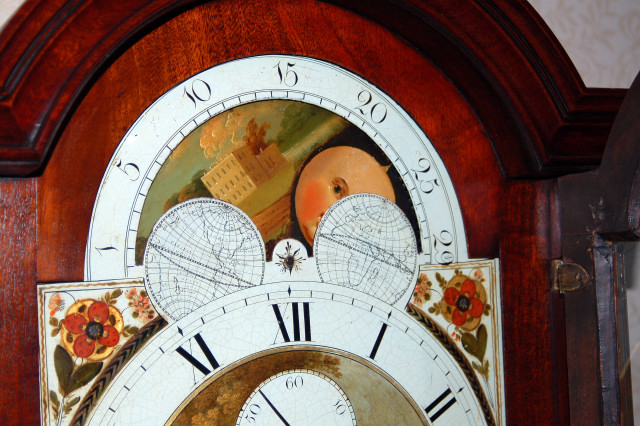
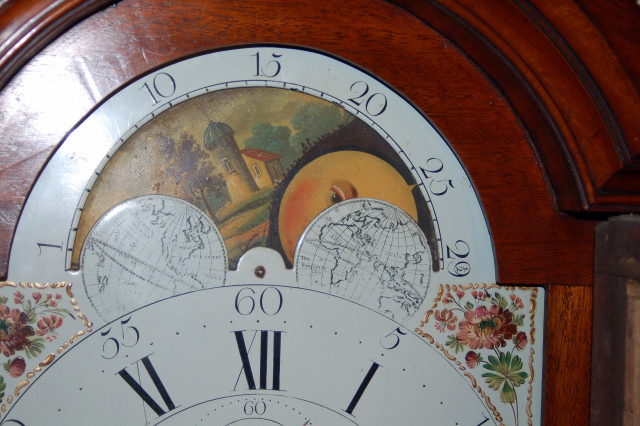
On an 18th century antique clock, a moon disc can either be a  circular disc to the arch or a globe moon to the arch, sometimes called a ‘Halifax Moon’. They also could be, or a small ‘penny moon’ normally to the dial centre. This is where the seconds disc normally would be. Clocks with moon discs and not accompanied with high tide indicators were for help when travelling by road.

Highwayman Higgins

The highwayman was always a risk for the merchant in the 18th century. Tt was always advisable to travel on days with the full moon and lots of light. Generally the highwayman did not work on such nights They were more likely to be recognised. The most famous of northern highwayman was a Edward ‘Highwayman’ Higgins, who was a gentleman by day and a thief by night. He resided on Gaskell Avenue in Knutsford. This is only 5 miles from where our antique clock workshop is based. Higgins was hanged for his crimes in 1767.

London longcase clocks with moon features are very collectible as London had street lighting in the 18th century. Also the arches on London clocks are slightly reduced and not a full semi-circle. They were not really designed for moons.  On provincial clocks you will notice the arch is a full semi-circle and alot more suited to a moon disc. It is for that reason finding a genuine London 18th century clock with a moon is highly sought after. Adding this feature to an 18th century London grandfather clock, can add up to £5,000 to the price on an equivalent clock.

Conclusion

I have been talking above about pre C.1800 clocks and clocks where the dials are 12 inches from side to side or less. Later clocks with dials of 13 inches or even larger are more likely to have moons and are not quite so rare. Clearly lots of later 19th century wider examples can have moons. These are more common and the moon disc on these is more for a form of decoration in my opinion than for any other purpose. We stock a few good examples at Pendulum of Mayfair of moon-phase clocks.

Pictures of different styles of moon dials below

Moonphase feature to square dialstandard moonphase C.1790


penny moon clock


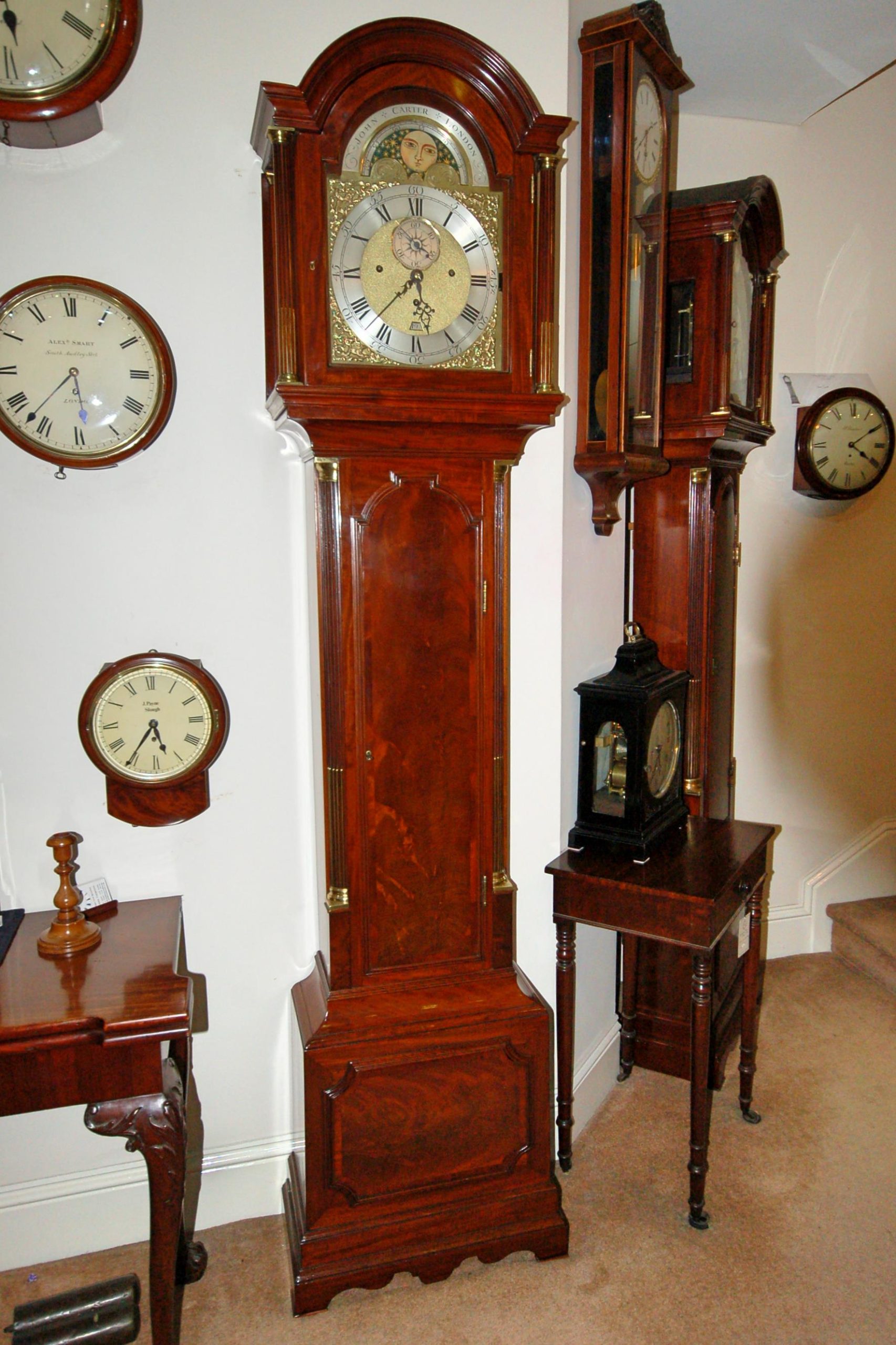
Antique Grandfather Clock by John Carter – London C1770

John Carter london mahogany moonphase to the arch grandfather clock

A superb London mahogany longcase clock with the dial signed by John Carter of London C1770.

The 8 day arched brass dial movement with three train mechanism. Striking the quarters on a peel of bells.

The lovely arched brass dial with chapter ring and spandrels, seconds and calendar features, finely matted centre and rare moon-phase feature to the arch.

The lovey quality cabinet with high quality London case features, quarter columns with brass strung and reeded and brass capitals, dome top to the hood and reeded and brass strung hood columns. Moulding to door and base panel. Standing on two plinths the lower shaped.

A London mahogany clock by John Carter shown in Fig 228/229/230 of the well known clock book Cescinsky and Webster- English Domestic Clocks.

Antique Grandfather Clock by Lawrence – Lancaster C1820

A very rare early 19th century oval dial 8 day duration grandfather clock, the dial signed Lawrence of Lancaster.

The lovey painted scene dial with subsidiary seconds, calendar and inset moon-phase to the centre. Rocking father time to the arch.

The 8 day duration movement striking the hours on a single bell.

The outsanding cabinet probably made by the famous firm Gillows of Lancaster. Typical Lancaster round top to the trunk door. Finely matched mahogany veneers to the trunk door and the base.

John Lawrence of Lancaster is recorded in Clocks of North Lancashire & Westmoreland by Susan Stuart as a clockmaker in Penny St, Lancaster from 1754 and was made a freeman of the city.

Brief History Gillows Cabinet Making Firm

Antique Grandfather Clock by Rylands – Ormskirk C1770

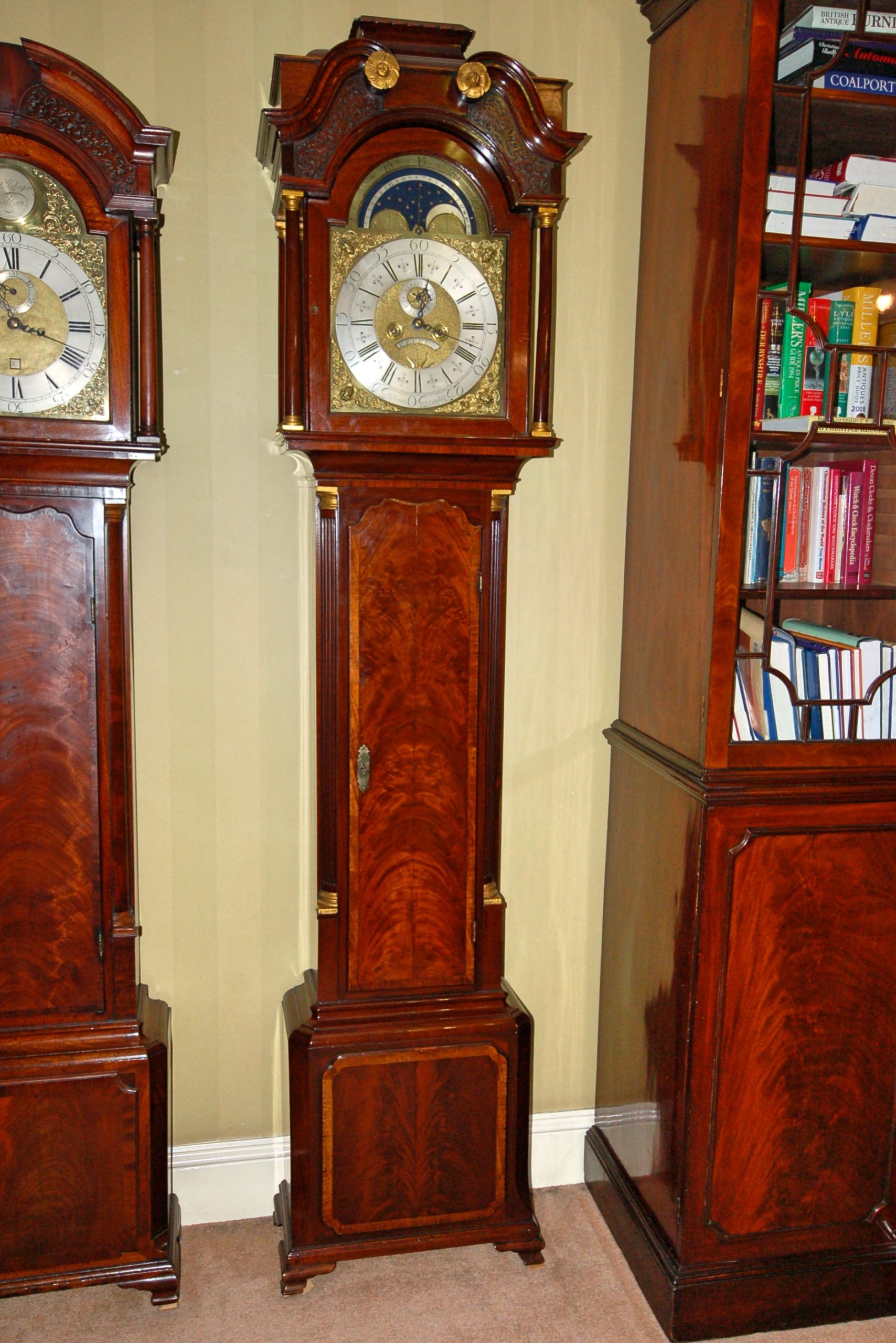
A fantastic mahogany cabinet arched brass dial 8 day duration grandfather clock.

Lovely arched brass dial with silvered chapter ring and fine quality spandrels, matted centre and ringed winding holes. Subsidiary seconds and calendar to the dial centre. Moonphase with today times to the arch.

Stunning quality mahogany cabinet standing on OG bracket feet, reeded quarter columns with wood capitals, matched veneer to the cross-banded trunk door. Swan neck pediments and a small caddy to the hood with fretwork beneath.

High quality movement striking the hours on a single bell. A collector’s clock.

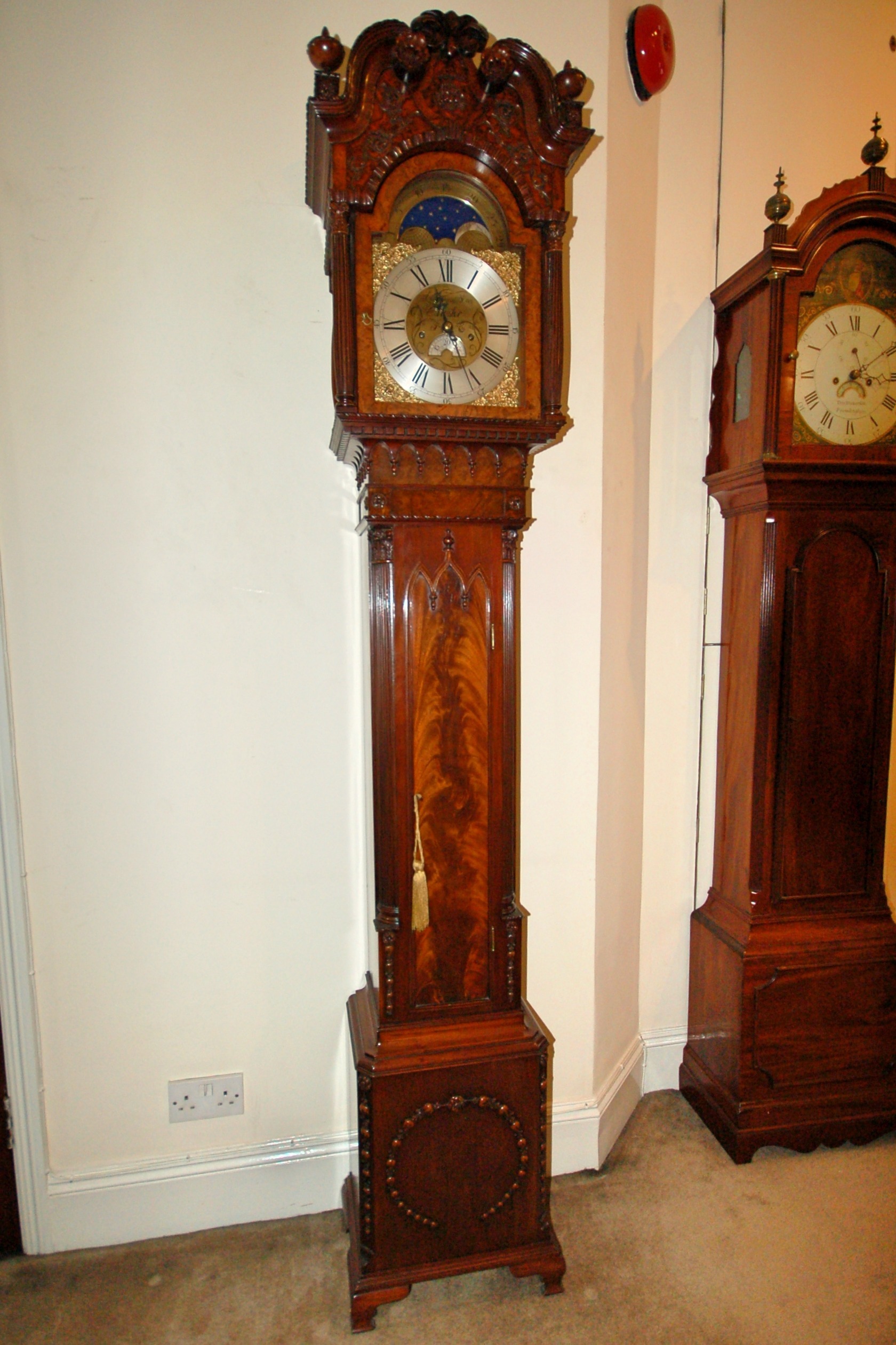
Antique Grandfather Clock by Lowe & Sons – Chester C1880

A simply stunning Chippendale style mahogany casework clock, both slim and elegant and with numerous casework details copying various 18th century case styles. Beautiful colour and patination and lovely figured mahogany veneers.

The dial showing silvered chapter ring and spandrels to the corners of the dial. Polished and engraved centre with subsidiary seconds feature. The name Lowe and Sons engraved to the centre of the dial. Moonphase feature to the arch.

The lovely quality 8 day movement striking the hours on a single bell. A collector’s clock.

Antique Grandfather Clock by Peter Wood – London C1785

Fantastic miniature grandfather clock by Wood London

An outstanding and rare GIII miniature London mahogany grandfather clock by Peter Wood of London.

The fantastic flame mahogany veneered cabinet of rare small proportions but showing the high quality London case features.

The lovely arched white dial with moonphase feature, subsidiary seconds and calendar features. The white dial with Roman numerals, gold leaf decorated corners and ‘Wilson’ painted strawberries and cherries to the corners.

The fine quality movement striking the hours on a single bell.

Antique Grandfather Clock by Samuel Guy – London C.1730

Samuel Guy main

A superb walnut veneered ‘8-day’ duration longcase clock. Moon phase example by Samuel Guy of London. Fantastic quality arched brass dial with finely matted centre. Furthermore the dial with chapter ring/spandrels.In addition moon to arch and wheat-ear engraving to border of dial. Also with seconds and calendar and alarm feature to centre of dial. Certainly a fine quality movement striking hours on a single bell.

Antique Grandfather Clocks

Antique Grandfather Clock by Jno. Kaye – Liverpool C.1790

Kaye main

An outstanding north country flame mahogany veneered Longcase clock. Featuring an arch brass dial of ‘8-day’ duration by John Kaye. The cabinet showing the finest choice mahogany veneers. Also with long trunk door with reeded quarter columns. Including OG bracket feet and swan neck pediments with blue glass/gold leaf decoration beneath.

The dial with chapter ring and spandrels, moonphase with tidal times, seconds, centre calendar and superbly matted and engraved  dial centre. Engraved above the moon is High water at Georges Dock. The movement striking the hours on a single bell. Well known Liverpool maker, this clock has huge significance.

It has engavings of places around the world so you can work out the corresponding times in these cities. The owner clearly was an important merchant. We purchased the clock from the famous Bibby family who had owned the clock for many years.

Antique Grandfather Clocks

Antique Grandfather Clock by Lassell – Park (Liverpool) 1760

Lassell main

A fine flame veneered mahogany ‘8-day’ duration. Featuring arch brass dial Longcase clock by Lassell-Park. The dial showing finely matted and engraved centre. Also with recessed seconds, calendar, and moonphase to the arch. The movement striking the hours on a single bell. The cabinet with outstanding flame veneered mahogany, pierced fretwork columns to trunk sides and dome top and fretwork beneath to hood. To sum up a very collectible clock.

Antique Grandfather Clocks

Antique Grandfather Clock by Joseph Finney – Liverpool C.1780

Joseph Finney main

Shown here an outstanding mahogany Longcase clock. Featuring here a 13 in arched brass dial example by Joseph Finney. Clearly of the finest quality by this eminent maker. The dial showing sweep seconds and centre calendar. In addition polished and engraved centre, chapter ring and spandrels. Also with moon feature to the arch. The superb quality ‘8 day’ movement with a magnificent and rare ‘pin wheel’ escapement. Beautiful quality flame veneered mahogany cabinet. Superb colour and of the highest quality construction. Joseph Finney is highly regarded. Furthermore he is probably the finest maker to come out of Liverpool in the 18th century. To sum up a superb collector’s clock.

Antique Grandfather Clocks