Posted on

London Mahogany Moon-Phase Grandfather Clocks

Moon-Phase antique grandfather clock by James Clarke of London
James Clarke London Grandfather Clock with Moon feature

A while back now I wrote a blog about moon-phase antique clocks. We restored this superb antique grandfather clock by James Clarke of London. I thought it was important to write a little more. More about London mahogany moon-phase clocks in particular and why they are so rare and sought after.
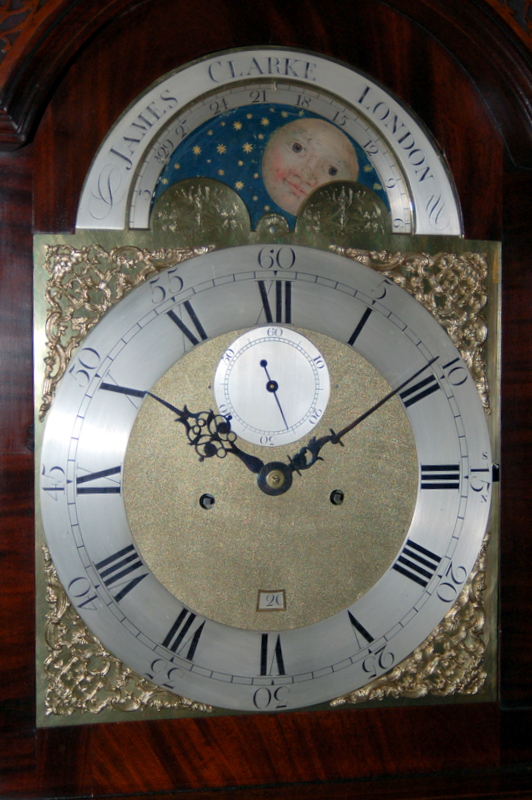
A fine 12 inch chapter ring and spandrels brass dial with moon and strike silent feature to the 3 o clock position on the dial
Lovely moon-phase James Clarke dial

London clocks with Moons

This clock above is a simply beautiful example of a London moon-phase clock. You will notice the high quality matted centre to the cast brass dial. Chapter ring and spandrels and subsidiary calendar. Recessed seconds feature and lovely engraving to the moon discs to the arch. The name is prominently engraved to the cartouche around the arch. It has beautiful painted moon disc and a special extra feature of strike/silent lever to the three o’clock position on the dial.
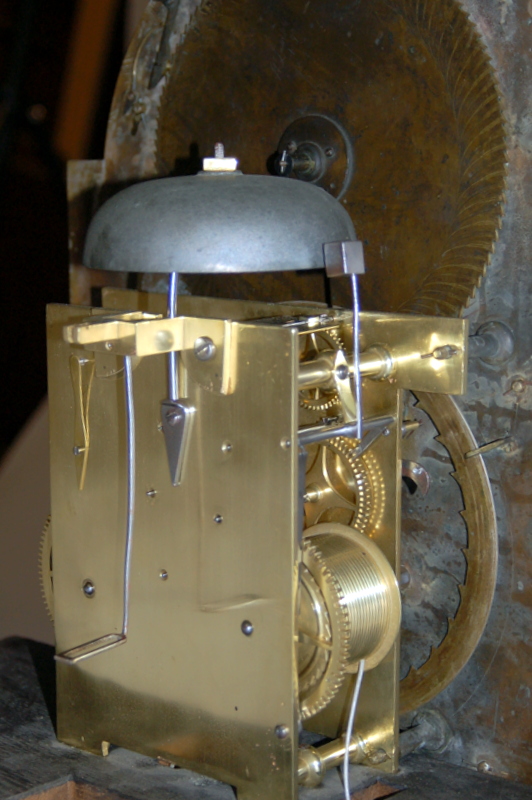
Lovely movement view of Clarke of London 8 day clock
Lovely 8 day moon movement by James Clarke of London C1770

Moon Workings

The picture above shows the beautiful workings of this James Clarke 8 day antique clock. You will notice one large extending piece of brass for the front plate top. This is so that the dial feet can miss the moon disc. Lovely high quality 5 pillar London movement, all now beautifully restored back to showroom condition.

I will now return to why so few London clocks have moon features.

Reasons why there so few London clocks with Moons

I suppose there are two main reasons. The first reason which is an important point to start from is the size of the London dials. Provincial 12 inch dials tend to be 17 inches high which would allow for a full semi circle to the arch. Easily enough space for a feature like a rotating moon disc. On a London clock the height is 1 inch less. That means on a 12 inch wide dial, the height of the dial is only 16 inches. The space to the arch is now no longer a full semi-circle and far more restricting. On the dial above you will notice the arch is not a semi-circle. The cartouche around the arch tapers to the centre.

Trading outside London

The second reason is centred around the fact that London is London. Trading in the UK outside London was not really required back then There were plenty of wealthy clients in and around London. Moons generally were required to check when to travel. Generally merchants would travel on and around full moons, so the risk of the Highwayman was not so great. Clearly some clocks like those with high tide, will also occur sometimes with moons.

High Water Tidal Clocks

Knowing when your high tide in your local port like London bridge was also important for the merchants. Travelling around London with the fact they had good street lighting fired by oil lamps after 1750 was not so hazardous. Knowing when the next full moon was, was not really as important.

As discussed in my other blog about moon phase clocks, there were lots of different types of moon. It is the rolling moon like that on the James Clarke clock that was the most popular. Two moons appear on these discs, but only one can be visible at any one time. Generally on London clocks the moon is accompanied by a starry sky rather than country scenes on provincial clocks.

29 and a half days in a lunar month

There are, as previously discussed, 29 and a half days in a lunar month. We divide up the 12 months into either 31, 30,29 or 28 days to compensate. The exact lunar cycle is 29 days, 12 hours, 44 minutes and 2.8 seconds I believe, I hope my memory is right ! The clocks moon as it is 29 and a half days and is therefore fairly accurate, once set !
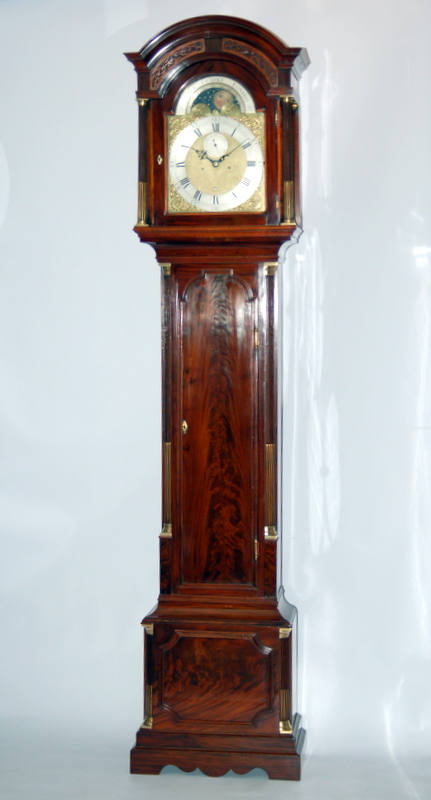
Lovely mahogany veneers and case features of this top quality London clock by James Clarke
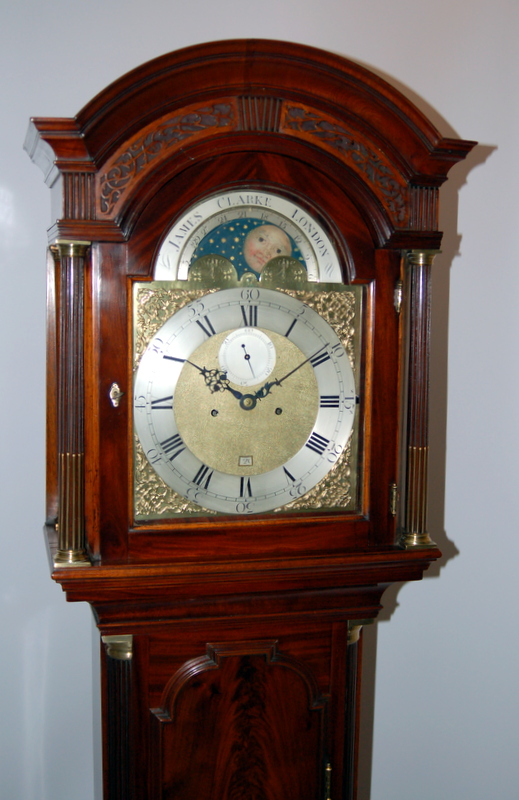
Full length picture of the James Clarke London mahogany clock

James Clarke Clock

The James Clarke antique grandfather clock picture above shows what a top quality clock should look like. The dial and movement show amazing high quality features and detailing. The case shows only the finest London case making features of the late 18th century. Quarter columns and brass capitals to the base. Moulding to bridge top door and base and 2 plinths are but some of these lovely features. To view this clock please visit our shop in London, Pendulum of Mayfair or contact us through our website https://www.pendulumofmayfair.co.uk . James Clarke is listed as working in Newgate Street, London and was apprentice in 1760 and a member of the Clockmakers Company from 1768-78.

Daniel R Clements

#SBS Theo Paphitis Winner August 2014 : Antique Clocks Twitter
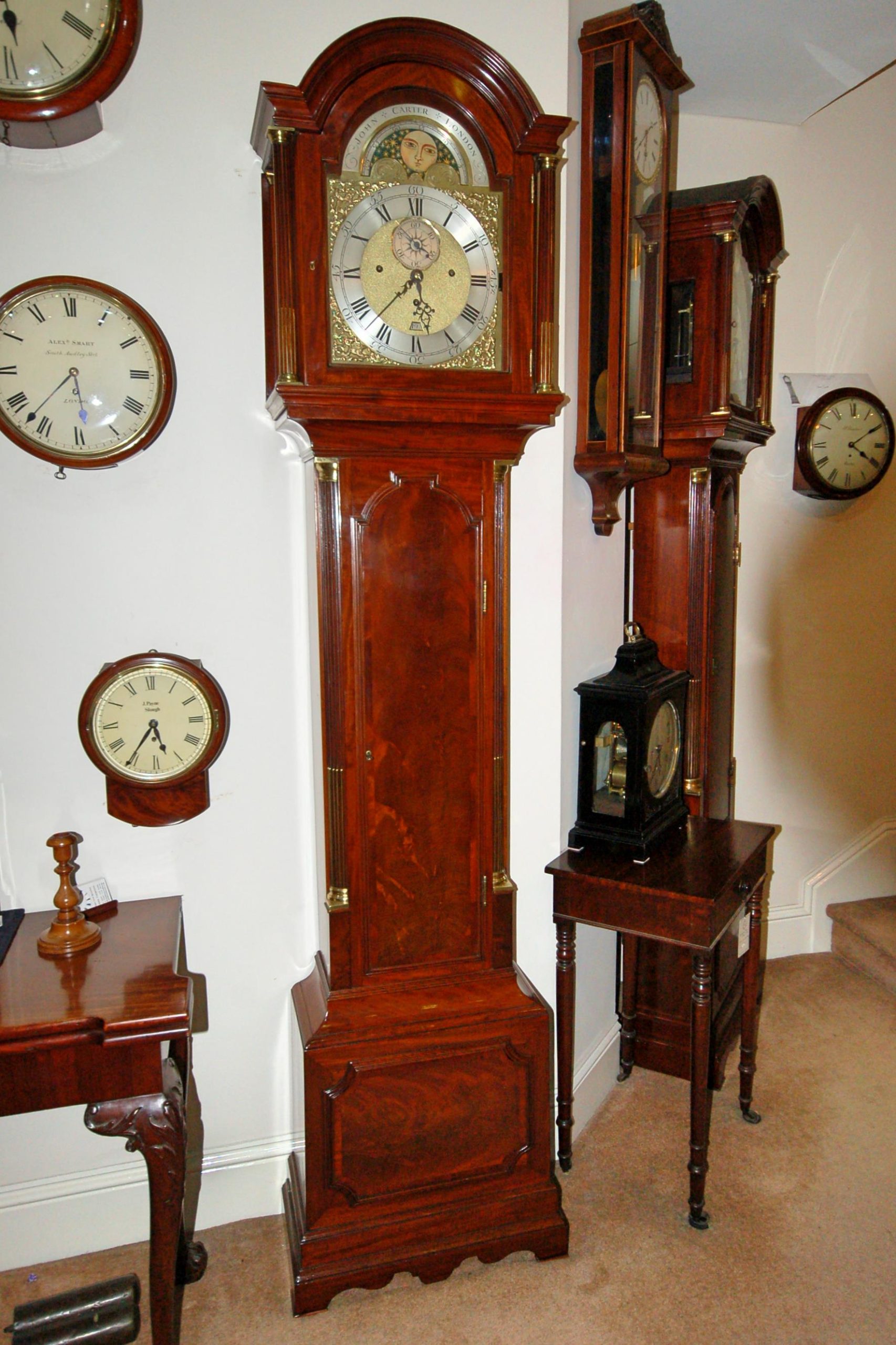
Antique Grandfather Clock by John Carter – London C1770

John Carter london mahogany moonphase to the arch grandfather clock

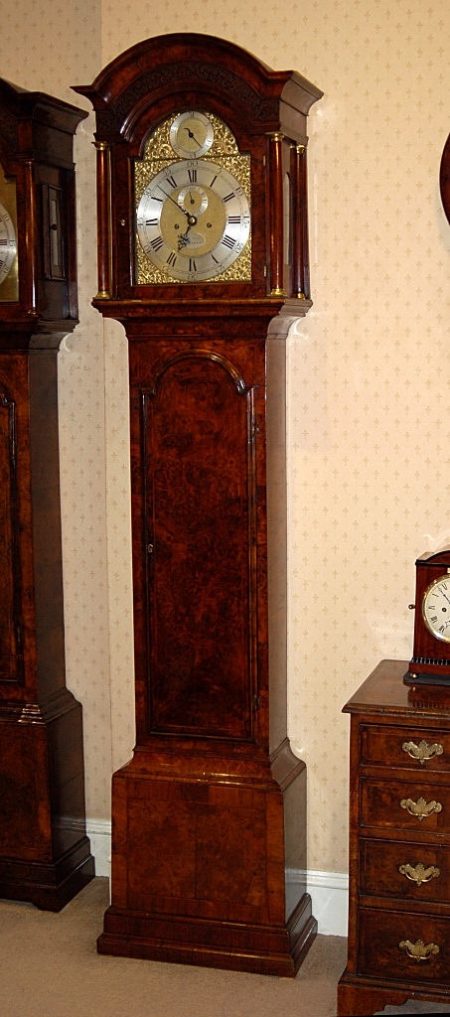
A superb London mahogany longcase clock with the dial signed by John Carter of London C1770.

The 8 day arched brass dial movement with three train mechanism. Striking the quarters on a peel of bells.

The lovely arched brass dial with chapter ring and spandrels, seconds and calendar features, finely matted centre and rare moon-phase feature to the arch.

The lovey quality cabinet with high quality London case features, quarter columns with brass strung and reeded and brass capitals, dome top to the hood and reeded and brass strung hood columns. Moulding to door and base panel. Standing on two plinths the lower shaped.

A London mahogany clock by John Carter shown in Fig 228/229/230 of the well known clock book Cescinsky and Webster- English Domestic Clocks.

Antique Regulator Clock Dial Signed F. Wiggins and Sons – Minnories, London

A lovely ‘8-day’ duration mahogany mercury compensated pendulum regulator clock with round silvered dial from the mid 19th century.

The fine round brass silvered dial signed by a likely retailer F.Wiggins and Sons Minnories London like these special clocks commonly were. The movement numbered by by what looks like a Thwaites and Reed Number from the mid 19th century.

Lovely large quality movement with dead-beat escapement and maintaining power. The pendulum hanging from the backboard with beat adjustment.

The cabinet of good colour and patination. It is veneered in what looks like the rare ‘plumb-pudding’ mahogany wood, to give distint grain effect.

The dial with typical regulator layout. Case of good proportions.

Antique Grandfather Clock by William Smith – London mid 18th century

William Smith London clock

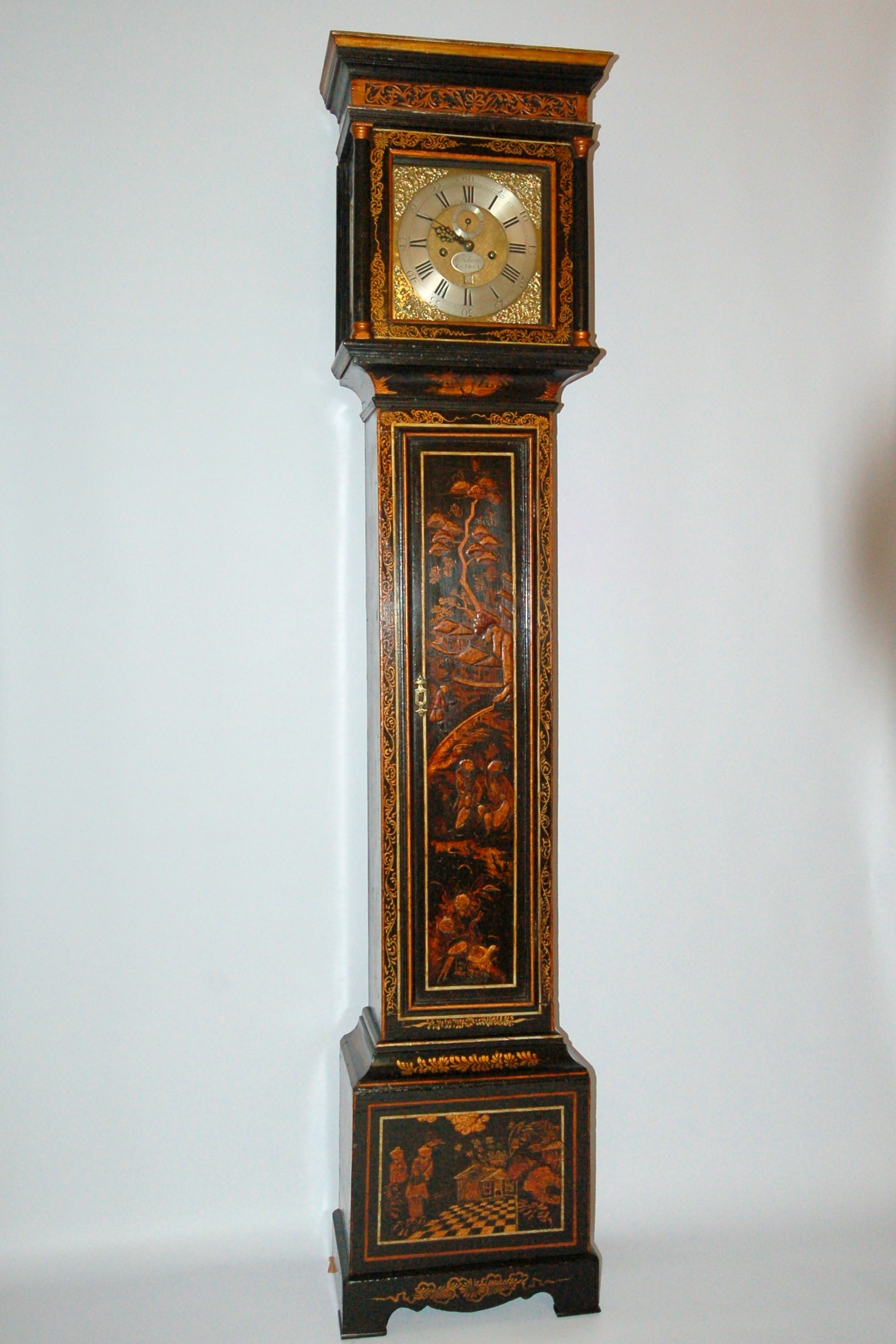
A superb chinoiserie decorated grandfather clock with the dial signed on a silvered cartouche William Smith London.

The 10inch brass square dial with lovely brass spandrels and silvered chapter ring with Roman numerals. The centre with fine matting and subsidiary seconds and calendar apertures.

The 5 pillar good quality movement striking the hours on a single bell.

The lovely decorated lacquer-work cabinet with flat top to the hood with fretwork beneath, long decorated trunk door with applied moulding. Decorated base panel with sce4nes and gold leaf decoration. All standing on a shaped single plinth.

William Smith is recorded as working, as a clockmaker, in Cheapside, London from 1750 to 1780. A very well respected clockmaking family who made clocks for members of the royal family. One is engraved “This clock was made In the Year 1763 For her ROYAL HIGHNESS the PRINCESS AMELIA By W Smith Moorfields London.”

Antique Bracket Clock by Eardley Norton – London C1790

Eardley Bracket Clock

A fine 18th century twin fusee striking bracket clock by this very fine clockmaker. Eardley Norton is listed as a maker of repute. The dial is signed here Yedrae Notron which was what the maker used on his clocks for export.

The arched brass dial with chapter ring and spandrels and finely matted centre. The rare moon feature to the arch on this clock. The finely matted centre with subsidiary calendar feature and strike silent to the 3 o clock position.

The twin fusee movement with hour bell strike and repeat function and finely engraved backplate with verge escapement.

The lovely mahogany cabinet of fine colour and patination and showing high quality London case features.

A collector’s clock.

Antique grandfather clock by James Snelling – London C1735

Snelling grandfather clock

Featured here a superb walnut veneered Longcase clock. Shown with arched brass dial 8 day movement by James Snelling of London. The dial with chapter ring and spandrels. In addition stunning matted centre with subsidiary seconds feature. Also with rare calendar to the arch and strike silent to the three o clock position.

The exceptional quality 5 pillar movement striking the hours on a single bell. The case of the finest choice walnut veneers. Furthermore showing all the typical high quality London case features. Moulding to the trunk door and two plinths. Lovely ‘book matched’ veneers to the trunk and the base to name but a few.

Finally James Snelling was an eminent clockmaker who was Master of the Clockmaker’s Company in 1736. He was based in Poultry in London. His clocks are located in various museums around the world. He died in 1751. To sum up I do not think you could find a walnut with better veneers. The case is one of the finest around. Colour and patination sublime.

Bracket Clock by Edward White – London 19th century

Edward White main

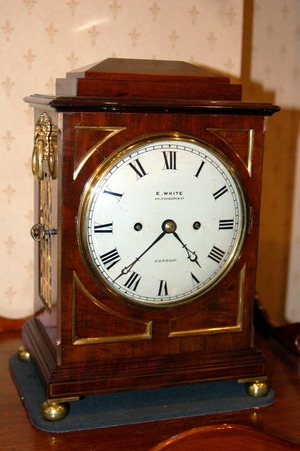
Bracket clock with fusee movement, bell strike and mahogany case. Moulded top case of small size. Edward White of London signed to the dial centre. Convex dial with Roman Numerals. Brass handles to sides of this clock and brass ball feet.Edward White worked closely with Dent. Known for his fine bracket clocks and chronometers.

Bracket Clocks

Antique Grandfather Clock by William Pitt – London C1800

William Pitt main

Featuring a superb white dial grandfather clock.Together with flame mahogany veneered cabinet. The convex dial signed William Pitt of London.

The high quality 8 day movement striking the hours on a single bell.

London cabinet showing all the high quality case features. Long trunk door with moulding, also with chamfered sides to the case. Brass frets to the hood. Dome top to case.Finally the clock being of delightful colour and patination.

Antique Grandfather Clocks

Antique Bracket Clock by Joseph Dodds of London C1795

Joseph Dodds main

A fantastic size and design round silvered dial bracket clocks. 8 day duration twin fusee movement with calendar to dial centre. Joseph Dodds of London signed to dial. Lovely engraving to the backplate. Pull repeat on a single bell and the movement striking the hours. The design made famous by the King’s clockmaker John Ellicott. Only the finest makers produced clocks of this style. A wonderful collector’s clock.

Bracket Clocks